|
The Education Agenda NS-Injustice enters its second funding phase
In 2026, EUR 9 million will be available for projects under the Education Agenda NS-Injustice. More than 200 impressive project ideas in the area of non-formal historical-political education addressing Nazi injustice have been submitted to the EVZ Foundation and are currently being reviewed. Selected executing organizations will be invited to submit full applications at the end of January. Before the new projects get underway in summer 2026, it is worth taking a look at the results of the 76 projects from the first funding phase: many of them have received awards, including the Grimme Online Award and the DigAMus Award. And the conversation continues on TikTok, too – content creator Rafid Kabir will be presenting projects and topics from the Education Agenda there over the coming weeks!
|
|
|
|
BRANDENBURG SOCIETY FOR CULTURE AND HISTORY
|
|
| How future-proof is Holocaust remembrance with VR headsets? |
|
|
|
| |
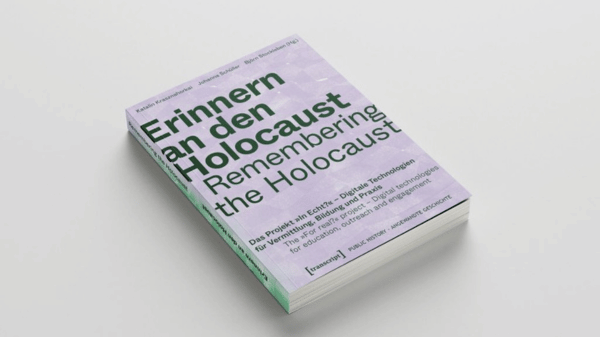
How can historical education responsibly address the past once the era of historical eyewitness testimony has come to an end? How can digital formats foster historical understanding without reducing complexity or uncritically creating the impression of an “authentic” encounter? The publication Erinnern an den Holocaust. Das Projekt “In Echt?” – Digitale Technologien für Vermittlung, Bildung und Praxis [Remembering the Holocaust. The project “For Real?” – Digital technologies for education, learning and practice documents] documents the Education Agenda project and continues to pursue its core questions. The project exhibition enabled encounters with Shoah survivors using virtual reality. The closing event in Potsdam on January 22 invites participants to discuss perspectives on digital remembrance culture together.
|
|
Find out more  |
| |
|
| CATHOLIC UNIVERSITY OF NORTH RHINE-WESTPHALIA |
|
|
Presentation of the participatory video piece VERZERRT
|
|
The video piece VERZERRT by Lena Ditte Nissen shows today’s Grafeneck Samaritan Foundation and the surrounding landscape: this is where the castle is located that became a site of Nazi “euthanasia” crimes in 1940. 10,654 people were murdered there by the National Socialists, including 407 children. One of these children, Bernhard Schmid, is presented through photographs and documents. A voice reflects on distortions of perception from the perspective of a descendant of perpetrators at the Grafeneck site. The video piece was produced in connection with the Education Agenda project Grafeneck – Münster / 1940 – today. The video piece will be presented at Reutlingen Town Hall at 7:00 pm on January 28 and will subsequently be on view there through February 8.
|
|
| Find out more |
| |
|
|
EVZ FOUNDATION
|
|
|
Anniversary podcast Wert & Würde [Value & Dignity]: a question of responsibility
|
|
|
|
| |
Where is the line between compensation and symbolic recognition of suffering? In the second episode of Wert & Würde [Value & Dignity], podcast host Daniel Christensen traces the long and arduous path that led to the payments made to former Nazi forced laborers by the EVZ Foundation in 2000. The episode explains which milestones paved the way and how denial of guilt and a lack of responsibility nearly caused the agreement to fail. Those featured include former Ukrainian forced laborer Inessa Mirtschewskaja, historian Constantin Goschler, former US Special Envoy Stuart E. Eizenstat, and also Michael Jansen and Jörg Freiherr Frank von Fürstenwerth, who represented the Foundation initiative during the negotiations.
|
|
| Listen now |
| |
|
|
AUGEN AUF [EYES OPEN] CINEMA DAY 2026
|
|
| Get tickets now for the premiere evening on January 27, 2026! |
|
|
|
| |
Looking the other way has never been a good idea. That’s why we’re heading to the movies together on the Day of Remembrance for the Victims of National Socialism. Taking place simultaneously in Berlin, Dresden, Erfurt, Frankfurt/Main, Rostock and Stuttgart, the Augen auf [Eyes Open] Cinema Day will officially open on the evening of January 27 with the film premiere of the family film Das geheime Stockwerk. Attendees at Delphi Filmpalast in Berlin will include: Christian Pfeil (survivor of the genocide of Sinti and Roma), Fabian Grischkat (activist and influencer), Dr. Andrea Despot (Chief Executive Officer of the EVZ Foundation) and film director Norbert Lechner. Other guests will join events throughout Germany, including cast members of the premiere film, Luigi Toscano, and Professor Meron Mendel.
Tickets for the premiere evening can be purchased on the websites of participating cinemas or directly at the box office.
Buy one, get two at the box office: In all cities except Frankfurt am Main, companions aged under 18 are admitted free of charge if a regular ticket is purchased.
|
|
| Purchase tickets |
| |
|
|
Schülerakademie Karlsruhe
|
|
New database on Nazi justice in Baden: digital research into Nazi special courts |
|
|
|
| |
|
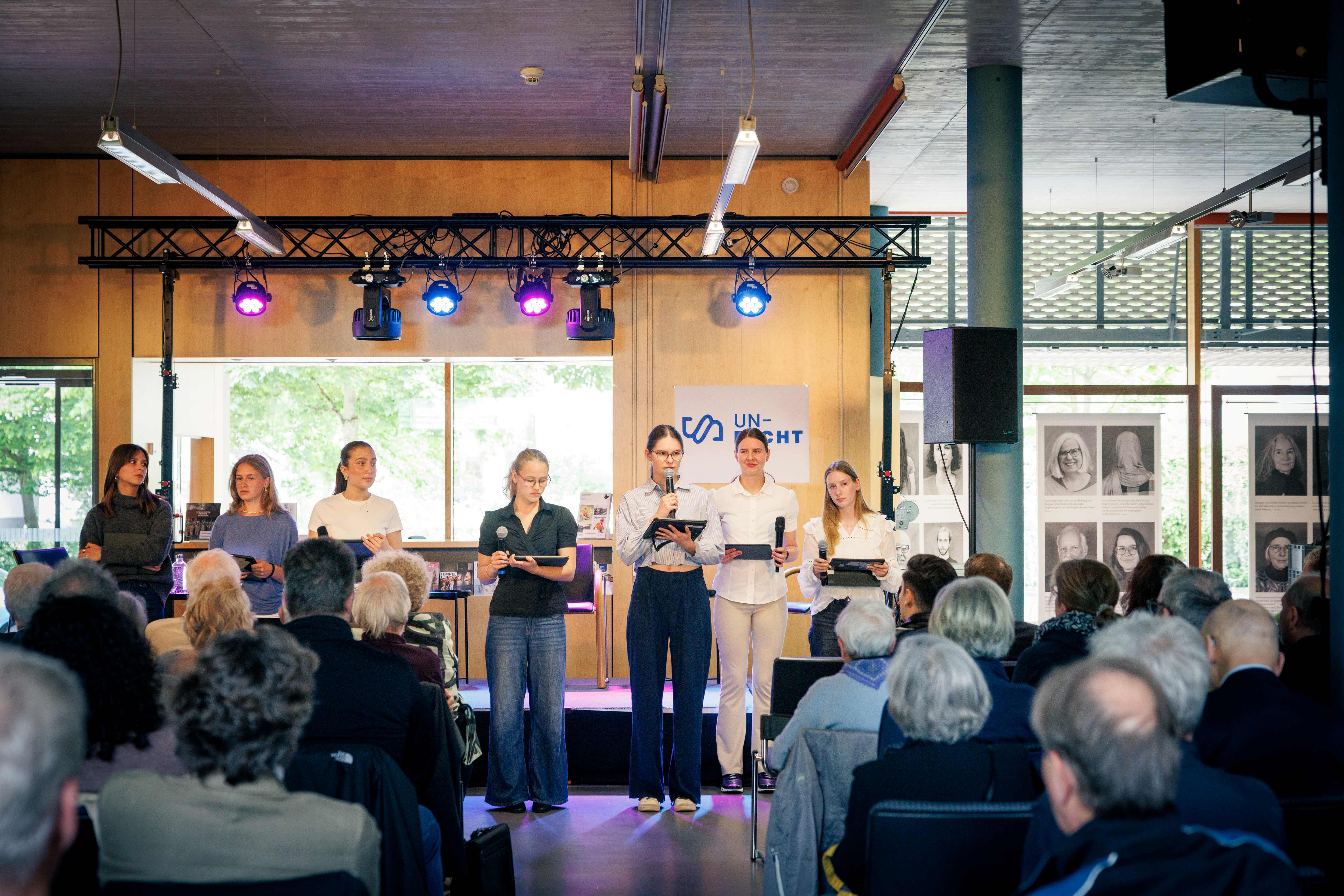
Between 1933 and 1945, around 8,000 cases were tried before the former Nazi special court in Mannheim. The relevant files are now held at the General State Archives Karlsruhe. In addition, documents pertaining to nearly 700 cases heard by the Nazi special court in Freiburg are held at the Freiburg State Archives. These records formed the starting point for the Education Agenda project Denunziation – Repression – Verfolgung [Denunciation – Repression – Persecution] by Schülerakademie Karlsruhe e. V., carried out in cooperation with the Baden-Württemberg State Archives. Selected original documents were examined from a scholarly and educational perspective, digitized as examples and made accessible to the public via a new platform about Nazi justice in Baden (NS-Justiz in Baden).
The database provides an overview of the history of the Nazi special courts in Mannheim and Freiburg and shows how the justice system was used for the purpose of repression under National Socialism. It offers free access to court files as well as targeted searches by person, case and location, also with reference to the user’s own place of residence. An e-guide helps users get started with reading and contextualizing the files, while a glossary explains key terms. Students were actively involved in the project: in a cross-school seminar course, they analyzed archival material under guidance, documented their findings and provided feedback on the methodological and didactic materials. Aimed at schools, non-formal education providers and those with an interest in history, the database invites engagement with the themes of denunciation and legal discrimination and conveys the importance of an independent judiciary.
|
|
| Start research into NS justice in Baden |
| |
|
| |
|
|
| |
|
|
| |
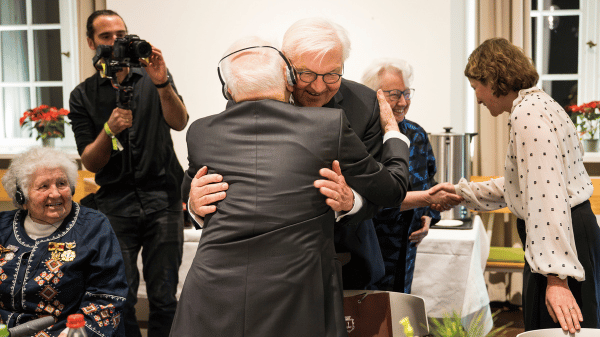
25 Years of the EVZ Foundation: encounter with survivors
At the ceremony marking the 25th anniversary of the EVZ Foundation at the Jewish Museum Berlin, Federal President Frank-Walter Steinmeier paid tribute to the Foundation’s work in encouraging young people to see their surroundings as places of history – places of injustice, but also of resistance and of help for those who were persecuted.
Eleven Survivors of National Socialist Persecution were invited as guests of honor and met the Federal President in person. Among them was Roman Schwarzman, a survivor of the Bershad Ghetto and chair of the Odesa regional association of former ghetto and concentration camp prisoners. He said that the Foundation had given him the feeling that people in Germany today stand up for peace and tolerance. Another guest was Leokadia Wieczorek, who survived Nazi forced labor as a child in Lower Saxony and spoke about the improvement in German-Polish relations.
The Federal President stressed that it was an honor for him to meet the survivors, to help carry their memories forward and to educate younger generations about what happened. The survivors were portrayed and interviewed by photographer Luigi Toscano, including Christian Pfeil, who was born in the Lublin Ghetto in 1944 and whose projects include local remembrance initiatives in his hometown of Trier.
|
|
| For the anniversary highlights, see the EVZ Foundation’s Instagram channel |
| |
|
| JÜDISCHE ALLGEMEINE |
|
| Tribunal 45: an interactive game about the Nuremberg Trials |
|
|
The computer game Tribunal 45 – Working on Justice was presented in historic Courtroom 600 in Nuremberg – the place where the major Nazi war criminals were put on trial 80 years ago. This marked the conclusion of the Gedenkanstoß tour and multi-module Education Agenda project that had been touring six cities with a traveling exhibition since May.
Representatives of the EVZ Foundation and Memorium Nuremberg Trials discussed with the developers of the game whether a computer game is appropriate to such a serious subject. The conclusion was clearly positive: games were said to be creative, innovative and engaging, enabling group play and voluntary engagement and thereby contributing to a living culture of remembrance.
Players take on the role of French lawyer Aline Chalufour, allowing them to gain interactive experience of legal procedures, historical contexts and decision-making processes. A memorial plaque was installed in the Nuremberg Palace of Justice last May to commemorate Aline Chalufour.
|
|
| Read the article |
| |
|
| FRANKFURTER NEUE PRESSE |
|
| Frankfurt History App shows traces of forced labor camps |
|
The Frankfurt History App points out the traces of forced labor camps that were operated in Frankfurt during the Nazi era. Thousands of men and women were forced to work under inhumane conditions in districts such as Griesheim and Gallus, including at the former Adlerwerke camp.
These historical sites were researched and free audio tours were provided in the app in connection with the Education Agenda project Die Stadt als Zeugin [The City as a Witness]. This enables users to explore the history of Nazi forced labor, the persecution of various groups and local resistance directly in the urban space. The app content was created in collaboration with local residents and implemented by Historical Museum Frankfurt. |
|
| Read the article |
| |
|
| |
|
|
|
|
|
| |
| Emanuela, Ula and Dascha of Eastern Queerope |
| |
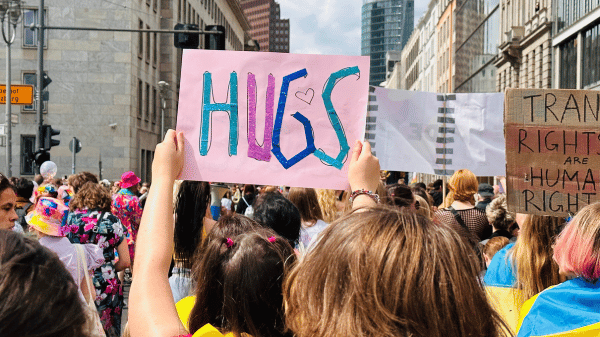
How do those involved in the n-ost Education Agenda NS-Injustice project History Unit: Reframing Queer Narratives in Media look back on their experiences? Eastern Queerope, a collective of three non-binary activists and journalists from Belarus and Poland, reflects on their engagement. The project aims to uncover and explore the often fragmented queer history of Eastern Europe. It focuses on regions that are usually left out of mainstream LGBTIQ narratives – including Belarus, Poland, Ukraine, and Hungary. A new podcast explores the queer history of Belarus – have a listen!
Is there a story or fate that touched you personally?
Emanuela: Every story I dive into becomes my new hyperfocus. I discover queer stories that are invisible in Western narratives – which tend to center around things like Christopher Street Day and Stonewall. These stories really move me. One person who deeply affected me was Agnieszka Kuśnierczanka, a person we know very little about. According to court records from a small Polish town, she was convicted in 1642: she was banished from the town for wearing typical men’s clothing and boldly flirting with women in local taverns. She would get drunk and end up fighting with men.
I don’t just want to document the queer stories we already have access to – which often involve more privileged people – but also the ones that are still invisible.
Ula: For me, it was the biography of Lieutenant Alexei Petrenko. He was an officer in the Soviet intelligence agency KGB and became a wanted man after beating his wife. He hid in Zaporizhzhia, Ukraine, and came up with a plan to clear himself of the domestic violence charges. His idea was to fabricate a case against gay men in the region and turn them in to the authorities. To do so, he had to enter into sexual relationships with as many men as possible.
This story stands out because there are so few documented cases that tell the stories of gay men in the USSR. Unfortunately we only know these details because the main figure was an informant for the KGB. And while he’s far from likable, his story yields valuable insights into male same-sex practices in the Ukrainian Soviet Republic during the 1960s.
|
|
| Read the full interview |
| |
|
|
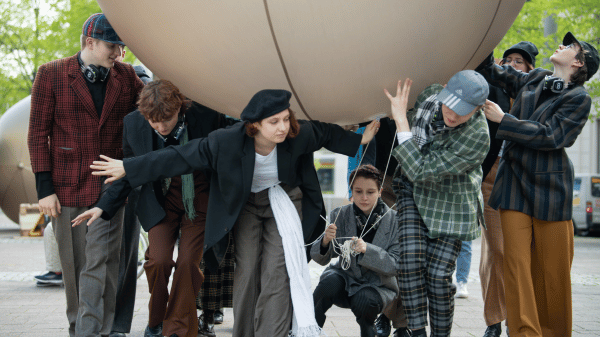
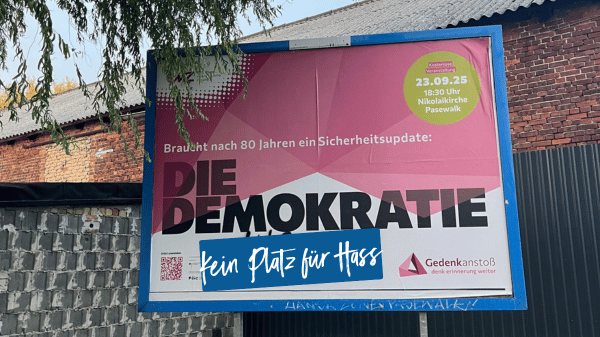
Gedenkanstoß tour: taking a clear stand against hate and antisemitism
Eighty years after the end of the Second World War, the Education Agenda NS-Injustice project Gedenkanstoß – denk erinnerung weiter [Rethinking how we remember] brought engagement with historical Nazi injustice into market squares, social media, and public debate.
Through artistic, interactive interventions in public spaces, the project commemorated Nazi history and the fates of those persecuted, while at the same time addressing present-day issues of exclusion and discrimination and exploring the lessons that can be drawn from the past. This took place in cities and towns that are not usually at the center of historical and political projects.
The Gedenkanstoß tour through six German cities met with a high level of interest and engagement. However, some posters were anonymously tagged with far-right codes, and the outdoor exhibition was defaced with antisemitic and dehumanizing slogans. The EVZ Foundation strongly condemns these attacks: it has reported the damage to the authorities, and reaffirms its position: #NoPlaceForHate – antisemitism, racism, and hostility toward others will not be tolerated.
Far-right and antisemitic attacks have increased in recent years, and more and more people in Europe hold right-wing populist views. Through the Gedenkanstoß MEMO study, the Institute for Interdisciplinary Research on Conflict and Violence (IKG) at Bielefeld University, together with the EVZ Foundation, examined the public’s willingness to engage with the history of National Socialism and assessed the current state of remembrance culture in Germany. Among other things, the study shows how important it is to convey historical knowledge so as to underpin present-day action and strengthen critical historical awareness.
|
| |
|
| NEWSLETTER 02/2026 |
|
| Our next issue comes out at the beginning of February! |
|
|
|
| |
|
In the next issue we’ll be back with updates on EVZ projects, upcoming events, and new funding calls.
|
|
| All issues at a glance |
| |
|
|
|
|
|
|
Stiftung Erinnerung,
Verantwortung und Zukunft
Friedrichstraße 200
10117 Berlin, Germany
T +49 (30) 25 92 97-0
F +49 (30) 25 92 97-11
Website |
| |
|
|
Responsible:
Dr. Andrea Despot and Jakob Meyer
Editorial:
Jana Bültge, Katrin Kowark, Sarah Keller, Sophie Ziegler
Image Credits:
Marie Laforge; Brandenburgische Gesellschaft für Kultur und Geschichte; Felix Grünschloss; Stefanie Loos; Daria Yemtsova
|
| |
|
|
|
|
| Follow us |
| |
|
|
|
|
|
|
|
The editorial team welcomes your opinion on the newsletter and will be happy to answer any questions. We also help with any issues you might encounter: newsletter@stiftung-evz.de
You are receiving this e-mail because you have subscribed to the newsletter of the EVZ Foundation. You can unsubscribe from this information service at any time. To unsubscribe, click here |
|
| If you are unable to click the link, please forward this newsletter to newsletter@stiftung-evz.de with the subject line "Unsubscribe". |
|
|
|
|
|
| © Stiftung Erinnerung, Verantwortung und Zukunft, 2026 |
|
|
|
|
|
|