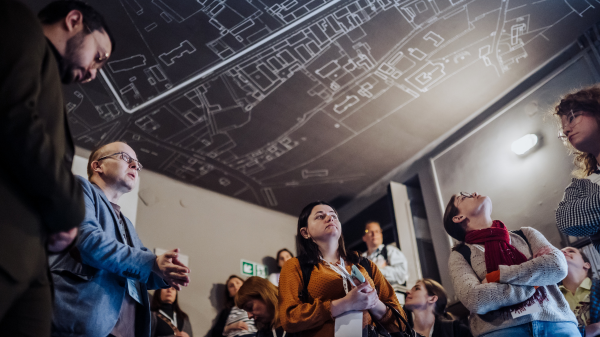
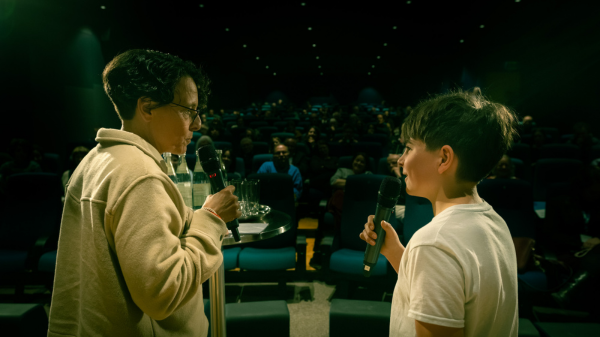
On February 23, 2026 the EVZ Foundation will be represented at Cafe Kyiv with two program events and an information stand.
Nothing was left …? Holocaust education in wartime: The “Holocaust by Bullets” – the mass shootings of Jews and Roma/Romnja between 1941 and 1945 – remains a blind spot in European remembrance culture. In the fifth year of Russia’s war of aggression, historic sites and memory culture are still under threat. The EVZ Foundation brings this topic into focus with an interactive event at Cafe Kyiv: following the premiere of the short film “Holocaust in Kharkiv” by journalist Lesya Kharchenko, a discussion will address the challenges and relevance of Holocaust education in wartime.
A second panel, From Stories to Records: How Ukraine Is Shaping Its Collective Memory – held in cooperation with Commit and the Robert Bosch Foundation – explores how Ukraine’s collective memory is taking shape amid Russia’s war of aggression and brings German and Ukrainian memory cultures into dialogue with one another. The discussion will also address the importance of “third places” for vibrant, shared remembrance.
At the EVZ Foundation stand, visitors can find out about funding activities in Ukraine and explore the digital learning resource “Nothing was left …?”, which offers methods for conveying the history of the “Holocaust by Bullets” based on the short film “Holocaust in Kharkiv”.
|
| |
|
| YOUNG PEOPLE REMEMBER ON SITE & COMMITTED |
|
| “Remembrance often begins quietly – with an image, a sound, or a voice.” |
|
|
|
| |
Three projects being run under the funding program YOUNG PEOPLE remember on site & committed demonstrate how new perspectives on the past and present help make gaps in remembrance visible.
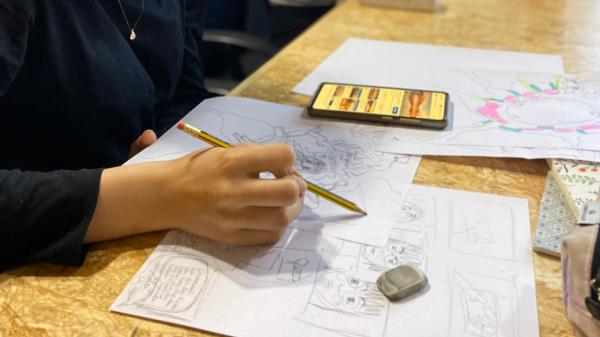
The graphic novels in ECHOES IN INK – Die Kunst des Erinnerns [The Art of Remembrance] by Jugend- & Kulturprojekt e. V. transform historical events and personal experiences into visual narratives. Based on biographical research into Jewish lives before, during and after the Shoah, young participants developed their own comic narratives, guided by artists, historians and educators. Their works speak of identity, loss and new beginnings.
The podcast Das Krankenlager im Wald. Vergessene NS-Verbrechen in Köln [The Sick Ward in the Forest: Forgotten Nazi Crimes in Cologne] and the website by Jugendclub Courage Köln e. V. address a long-forgotten crime: shortly before the end of the Second World War, members of the Volkssturm militia cleared a sick ward in the Gremberg woods and murdered dozens of forced laborers. The podcast traces the difficult path towards achieving dignified remembrance of this massacre, with voices of victims and survivors made publicly audible for the first time.
The digital city tour History Trail by Fanprojekt Osnabrück traces Nazi associations with the stadium at Bremer Brücke, linking historic sites to the lived realities of young people under National Socialism. How did young people experience the war and Nazi crimes? Did they put up resistance? The project shows that football, too, has a Nazi history – as a place of both encounter and exclusion. |
|
Find out more about the projects  |
| |
|
| NEW CALL FOR APPLICATIONS |
|
| Apply by March 9: Latcho Dives 2.0 |
|
| The aim of the EVZ Foundation’s funding program Latcho Dives 2.0 is to support survivors of the genocide of Roma/Romnja during the Second World War and their descendants. Survivors are particularly hard hit by the consequences of Russia’s war against Ukraine, with many elderly people still facing severe poverty, displacement and re-traumatization. The program provides access to medical, legal and social services as well as vital humanitarian assistance. Through this program, the EVZ Foundation also funds projects dedicated to subsequent generations, supporting Roma/Romnja self-organizations in Ukraine and the Republic of Moldova that seek to strengthen equal participation, raise the visibility of their history and culture, and further develop their own collective. |
|
| Apply now |
| |
|
| NEW CALL FOR APPLICATIONS |
|
| Apply by April 7: local history projects sought in Poland, the Czech Republic, and Slovakia |
|
|
|
| |
| Through its funding program local.history, the EVZ Foundation supports local and regional history initiatives in Central and Eastern Europe that work across generations to address the Nazi past. Organizations based in Poland, the Czech Republic and Slovakia are eligible to apply. Projects involving transnational cooperation with partner organizations based in other European countries are particularly welcome. |
|
| Apply now |
| |
|
| NEW CALL FOR APPLICATIONS |
|
| Apply by March 16: ROVA enters its second round |
|
|
|
| |
| The second call for applications under the EU-funded and EVZ co-financed project ROVA (Roma Organisations Promoting EU Values) is now underway: organizations from all EU member states can apply in three different project tracks. ROVA is aimed at Roma/Romnja and Sinti/Sintize self-organizations as well as organizations that support Roma/Romnja and Sinti/Sintize. Its goal is to strengthen and connect organizations in their work in support of core EU values such as equality, human rights, anti-discrimination, and civic education. |
|
| Apply now |
| |
|
| |
|
|
| |
|
|
| |
“In class, you don’t learn about what people actually felt”
On the Day of Remembrance for the Victims of National Socialism, the Augen auf [Eyes Open] Cinema Day 2026 brought people together in cinemas across Germany to watch films addressing Nazism, persecution, resistance, and their aftermath to this day. Discussions with filmmakers, experts and committed participants highlighted the power of film as a medium.
After the premiere of DAS GEHEIME STOCKWERK, students asked questions about the Nazi era: “Why did the Nazis hate the Jews?” They also shared their emotional reactions to films such as THE ZONE OF INTEREST: “The film caused a sense of revulsion in me – an incredible and very distinct feeling I would rather not experience again.”
Under the motto When do I raise my voice?, the cinema day raised questions about responsibility and civic courage. “Right now we still have the opportunity not to look the other way but to raise our voices. That’s a privilege that is still enjoyed by only a small part of the world’s population,” said Professor Meron Mendel of the educational center Bildungsstätte Anne Frank. Renate Aris reminded the audience: “I am the last Holocaust survivor in the Dresden, Chemnitz and Görlitz region. After me, there will be no one left from this region who is able to bear witness.” |
|
A first look back at Cinema Day 2026  |
| |
|
| |
|
|
|
|
|
| |
Young voices at Cinema Day |
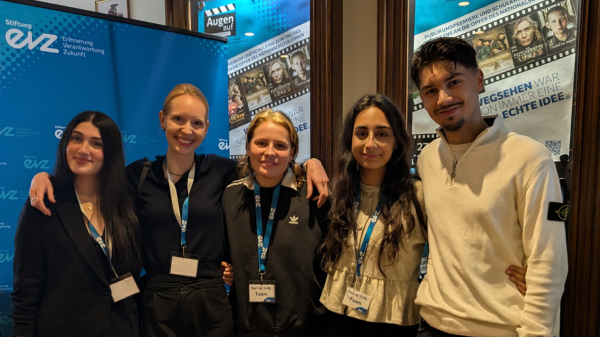
For the first time, the Augen auf [Eyes Open] Cinema Day 2026 was supported by EVZ Foundation Film Ambassadors. Young people aged 18 to 25 attended screenings in several cities and talked to visitors, students and experts in the areas of film and historical-political education. Their impressions will provide original content for the EVZ Foundation’s social media channels in the coming weeks.
In Frankfurt am Main, the Film Ambassadors met screenwriter Katrin Milhahn (DAS GEHEIME STOCKWERK), Professor Meron Mendel and members of Omas gegen Rechts [grandmothers against the Right]. In Dresden they spoke to students and also to Holocaust survivor Renate Aris about the significance of January 27, while in Berlin they conducted interviews about the premiere film with rbb, director Norbert Lechner and lead actor Silas John, among others.
The Film Ambassadors used their perspectives to bring Cinema Day closer to young audiences. More impressions will follow soon on the EVZ channels.
|
View Cinema Day highlights  |
| |
|
| 25 YEARS OF THE EVZ FOUNDATION |
|
| Week of encounters with eleven survivors of Nazi persecution |
|
|
|
| |
On the occasion of the 25th anniversary of the EVZ Foundation, eleven survivors of Nazi persecution traveled from Belarus, Germany, Israel, Poland, the Czech Republic and Ukraine, accompanied by family members. In connection with the anniversary ceremony, they had opportunities to meet, talk and take part in a range of events. Before the ceremony they spoke to the Federal President, while during their stay they were looked after by EVZ Foundation staff. The program included concerts at the Berlin Philharmonie and the Konzerthaus, and also a walk through the Christmas market on Gendarmenmarkt. A two-hour tour of the city also included a visit to the exhibition Ma Bistrass by photographer Luigi Toscano.
Personal visits and encounters were a key feature of the week. Marie Abrahamova from the Czech Republic visited the memorial site at Barnimstraße 10, the house where she was born in 1943 while her mother was imprisoned. The Polish group was received by the Polish ambassador and visited a former forced labor camp in Blankenfelde where Bogdan Bartnikowski had been imprisoned. Andrei Moiseenko from Belarus spoke to a school class about his life, while Roman Schwarzman from Odesa met young people in a synagogue. |
|
| How the EVZ Foundation supports encounters with historical eyewitnesses |
| |
|
| |
|
|
|
|
|
| |
| Maya Roisman, Jewish Museum Frankfurt |
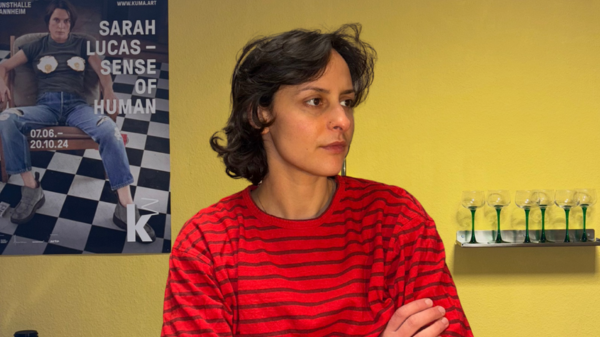
Maya Roisman works at the Jewish Museum Frankfurt. She manages the museum’s TikTok channel and is active in the Jewish Student Union. In connection with the school cinema program in Frankfurt am Main, she spoke to children and young people about their impressions, thoughts, and questions regarding the films.
In your view, what opportunities does teaching history through film have to offer?
There are many different ways to approach National Socialism and the Holocaust. People learn in different ways, too. While some need facts, numbers, and texts, others find it easier to engage with the topic on an emotional, personal level – such as through a story. A lot of people can be reached in this way.
In the film A REAL PAIN, we encounter characters who deal very differently with their emotions and who struggle internally at the site of the crimes. A lot of people might identify with this. We’re often expected to show clear, unambiguous feelings when we talk about these topics. But I believe it’s really important to explore your own mixed feelings when engaging with the subject. Art as a form of expression can convey this ambivalence and the complexity of memory in a particularly powerful way.
A REAL PAIN tells the story of two cousins whose grandmother has died – a Holocaust survivor from Poland. So the film addresses a real historical turning point: a lot of historical eyewitnesses are no longer alive, or else they’re very old. This has a major impact on how memory is passed on, especially within families.
|
| Read more |
| |
|
| |
|
|
|
|
|
| |
| MIA report highlights structural discrimination against Sinti/Sintize and Roma/Romnja in the police force |
| |
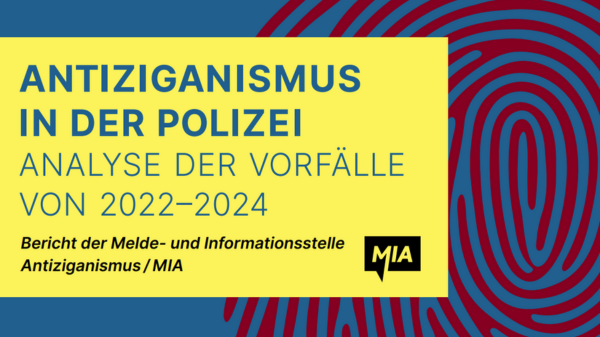
In December 2025, the Reporting and Information Center on Antigypsyism (MIA) published its report Antiziganismus in der Polizei [Antigypsyism in the Police]. It is based on 215 reported cases from 2022 to 2024. The analysis shows that antigypsyist discrimination in the policing context is not an isolated phenomenon but follows recurring patterns and is deeply embedded in institutional routines. Among other things, Sinti/Sintize and Roma/Romnja report that complaints are not recorded, incidents are trivialized, controls are carried out without cause, and disproportionate force is used. In some cases, filing a complaint led to those affected becoming the subject of investigations themselves. The report builds on the assessment of the Independent Commission on Antigypsyism, according to which the police has played a key role in reinforcing antigypsyist stereotypes, both past and present – for example in the context of so-called “clan crime.” MIA calls for comprehensive reforms to explicitly call out institutional antigypsyism and effectively combat discrimination, the disproportionate use of force, racial profiling, and stigmatizing communication.
The EVZ Foundation supports projects by and for Roma/Romnja and Sinti/Sintize and advocates for their rights and equal participation. In the news section of this issue, we present two new calls for applications that strengthen Roma/Romnja and Sinti/Sintize self-organizations.
|
|
| Read the MIA report on antigypsyism in the police |
| |
|
| EVZ FOUNDATION PODCAST |
| |
Third episode of Wert & Würde [Value & Dignity] – at the very last moment |
| |
Why did Ludvik Jirus, the grandfather of podcast host Daniel Christensen, receive no compensation – even though he was among those subjected to forced labor?
The third episode of Wert & Würde [Value & Dignity] introduces listeners to the highly complex payment process through which the EVZ Foundation provided compensation to surviving former Nazi forced laborers in Central and Eastern Europe. Insights are provided by historians Martin Bock and Gabriele Freitag, who coordinated the process on the German side, while Jakub Deka and Darina Sedláčková describe how they reached those affected in Poland and the Czech Republic and why trust was so crucial. The obstacles and unreasonable burdens that accompanied the process are also addressed. It emerges clearly that even after the successful establishment of the EVZ Foundation, questions of justice, recognition, and dignity had to be renegotiated again and again during the payment process. |
| |
Listen to the new episode of the podcast  |
| |
| |
|
| REPORT FROM KHERSON |
| |
What is the role of “third places” in the context of Russia’s war against Ukraine? |
| |
| A report from Kherson shows how important “third places” are for cohesion and resilience in Ukrainian society. In this city that suffers daily shelling, a “third place” has been set up in the air raid shelter at Mykola Kulish Theater for Music and Drama. Residents are constantly at risk, and yet this space allows them to come together, exchange ideas, and support one another. The report was produced by Alona Movchan, a journalist from Kherson and volunteer at the “third place”. In November 2025, she spoke at the event Gerechter Frieden und gesellschaftlicher Zusammenhalt [Just Peace and Social Cohesion] in Berlin, which was organized jointly with Renovabis. The report was recorded in Ukrainian and is available with subtitles in three languages (UA/DE/EN). |
| |
| Find out more and watch the report |
| |
| |
|
| TAGESSCHAU |
| |
Enabling encounters with historical eyewitnesses |
| |
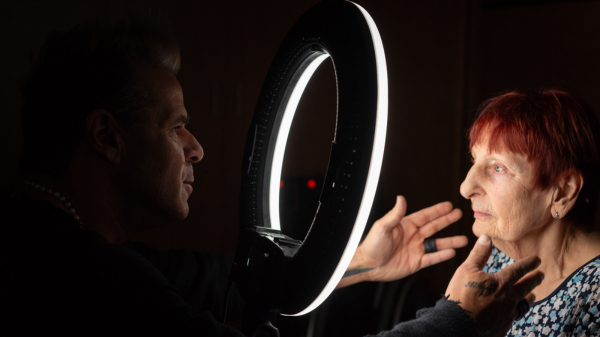
According to the Jewish Claims Conference, 90 percent of Holocaust survivors will no longer be alive by 2040. In order to keep memory alive, especially for young people, the education project For real? and the educational platform Shoah Stories run by the Anne Frank Center make use of digital formats.
For real? uses VR headsets to enable encounters with historical eyewitnesses such as Kurt Hillmann, Leon Weintraub, and Charlotte Knobloch: their stories can be experienced in virtual space, enabling users to ask questions, so that there is the impression of a direct dialogue.
Shoah Stories conveys the Holocaust through short videos on TikTok and Instagram. Here, users can take part in virtual tours of memorial sites and learn about Nazi history and antisemitism. Educational materials are provided for schools as a supplement. The two approaches offer curated content and academically vetted educational resources for future generations. |
| |
| Learn more |
| |
| |
|
| SAVE THE DATE |
| |
| Take part in HISTODAY 2026 on May 7 and 8 in Berlin! |
| |
More than 160 contributions from 33 countries have been submitted. Thank you for the enormous commitment you showed under the theme NO TIME TO FORGET – For Democracy, Facts, and Human Dignity.
Starting in March, registration will open for participation in Histoday in connection with the EVZ Foundation’s 25th anniversary. People of all ages from Germany and across Europe are invited to a European history festival that critically engages with the past and boldly asks questions about the future. Antisemitism, historical revisionism, polarization, and global crises require new answers. Remembrance is crucial in strengthening democratic resilience. |
| |
| Stay up to date by subscribing to our event mailing list |
| |
| |
|
| SAVE THE DATE |
| |
Photo competition to mark the EVZ Foundation's anniversary |
| |
To mark its 25th anniversary, the EVZ Foundation is once again organizing a photo competition in spring 2026. Under the slogan NO TIME TO FORGET, the competition is looking for entries that photographically capture the current challenges and changes in historical and political education in times of war, global crises, and digital transformation.
Further information about the competition will follow shortly. |
| |
| Anniversary activities of the EVZ Foundation |
| |
| |
|
| ISSUE 03/2026 |
|
| Our next issue comes out at the beginning of March! |
|
|
|
| |
| Once again, the upcoming issue will present the themes and content of the Education Agenda NS-Injustice: dates, updates, and outcomes of projects. |
|
| All issues at a glance |
| |
|
|
|
|
|
|
Stiftung Erinnerung,
Verantwortung und Zukunft
Friedrichstraße 200
10117 Berlin, Germany
T +49 (30) 25 92 97-0
F +49 (30) 25 92 97-11
Website
|
| |
|
Responsible:
Dr. Andrea Despot and Jakob Meyer
Editorial:
Jana Bültge, Katrin Kowark, Antonia Kruse, Sophie Ziegler
Image Credits:
Jugend- & Kulturprojekt e.V.; Bartek Żurawski; Łukasz Überhuber
|
| |
|
|
|
|
|
Follow us
|
| |
|
|
|
|
|
|
|
The editorial team welcomes your opinion on the newsletter and will be happy to answer any questions. We also help with any issues you might encounter: newsletter@stiftung-evz.de
You are receiving this e-mail because you have subscribed to the newsletter of the EVZ Foundation. You can unsubscribe from this information service at any time. To unsubscribe, click here
|
|
|
If you are unable to click the link, please forward this newsletter to newsletter@stiftung-evz.de with the subject line "Unsubscribe".
|
|
|
|
|
|