EVZ Histoday 2026 in Berlin: NO TIME TO FORGET. For Democracy, Facts and Dignity
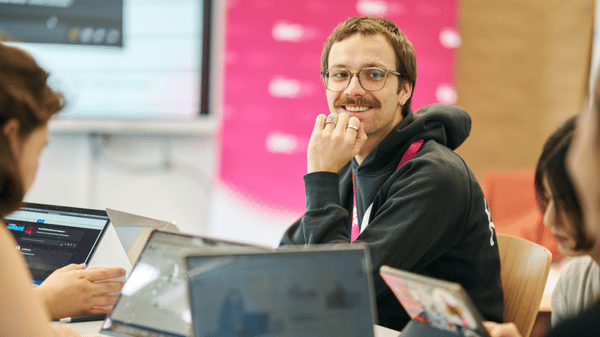
On May 7 and 8, the EVZ Foundation invites participants to EVZ Histoday – a European history festival dedicated to critically examining the legacy of National Socialism and addressing current challenges facing democracy, facts, and human dignity. People of all ages from Germany and across Europe are invited to come together to discuss history and its relevance to the present and the future.
The program begins on May 7 with tours and trips offering insights into selected projects and initiatives on site. This is followed by an opening event and get-together with live music. On May 8, participants can look forward to a full-day program, featuring workshops and interactive formats designed to share perspectives and explore new approaches to historical-political education. The event concludes with the flash mob “Liberation Dance” on Friedrichstraße near Besselpark which brings remembrance into public space and invites active participation.
|
| |
|
|
ANNIVERSARY FUNDING PROGRAM
|
|
|
More than one million Euro for survivors of National Socialism in Germany
|
|
|
The new funding program NO TIME TO FORGET focuses on individuals with an exceptional personal history: elderly survivors of National Socialism from the former Soviet Union who now live in Germany. Their life stories are often marked by hardship and deprivation: having experienced persecution and violence during the Second World War, they often received no official recognition of their fate in the Soviet Union, and ultimately took the step of moving to a foreign country – Germany – where they once again had to find their footing and make their way. These individuals embody a particularly powerful resilience and a strong will to live. Project proposals were invited from organizations and initiatives that provide culturally sensitive support in day-to-day life for these people and help keep their memories alive. Nine selected projects will receive funding for a period of up to three years starting in April.
|
|
Find out more 
|
| |
|
|
ANNIVERSARY PODCAST
|
|
|
Value & Dignity: listen now to all episodes on the recognition and critical reappraisal of NS forced labor
|
|
|
|
| |
The establishment of the EVZ Foundation enabled former forced laborers to apply for compensation. Twenty-five years later, a podcast sheds light on the background and the long process of critically reappraising this crime through a personal journey of discovery.
Actor and podcast host Daniel Christensen traces the life of his grandfather Ludvik Jirus, who was forced into labor in Prague under the German occupation. Across four episodes, different aspects are explored: NS forced labor as a societal crime (Episode 1), the long road to compensation programs (Episode 2), the complex payment process, particularly in Central and Eastern Europe (Episode 3), and the lasting effects and political consequences of the negotiations (Episode 4).
|
|
|
Listen now
|
| |
|
|
ANNIVERSARY CAMPAIGN
|
|
|
Last Call: photo competition #notimetoforget
|
|
|
|
| |
Show through your photo why there is NO TIME TO FORGET – global crises, digital transformation, and revisionist narratives pose new challenges to remembrance culture. We are looking for images that highlight such things as new developments and established approaches in the area of historical-political educational work.
Post your photo by April 5 on your public Instagram account using the hashtags #EVZphotocompetition and #notimetoforget, follow @evzfoundation, and tag the account. Alternatively, you can use the form on our website.
|
|
|
Full details on the website
|
| |
|
|
NEW CALL FOR APPLICATIONS
|
|
|
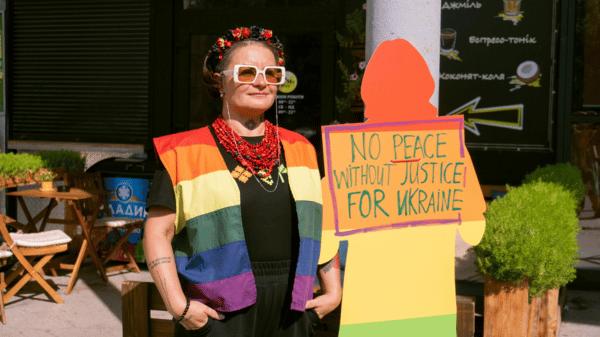
ILGA-Europe supports LGBTIQ organizations in Ukraine
|
|
|
|
| |
ILGA-Europe’s new annual report provides an overview of the human rights situation for LGBTIQ people in Europe and Central Asia in 2025. It shows how civil rights are under threat from legal restrictions, so-called “propaganda” laws, and shrinking civic space. At the same time, the report underscores the importance and urgency of protective measures and policy strategies dedicated to equality and participation.
Under a new call issued by the EVZ Foundation, ILGA-Europe is supporting four LGBTIQ organizations in Ukraine with EUR 50,000 each from June 2026 to May 2028. The aim is to sustainably strengthen the civil society presence, public voice, and institutional and social engagement of the LGBTIQ movement in Ukraine.
|
|
|
Apply by April 12
|
| |
|
|
Award
|
|
|
Active engagement in combating antisemitism at the workplace
|
|
|
|
| |
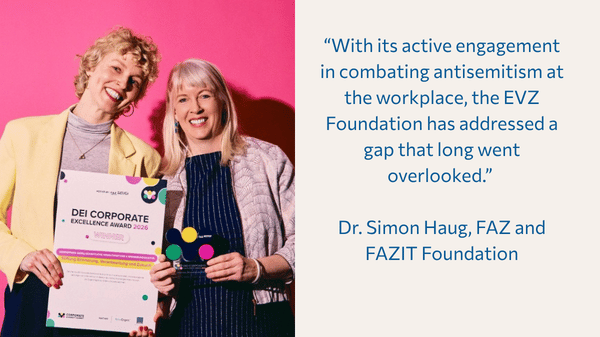
The EVZ Foundation’s initiative Informed, courageous, committed! received a special prize at the DEI Corporate Excellence Awards for its contribution to social responsibility and memory culture.
Initially launched under the Education Agenda NS-Injustice in 2022, the project has delivered a wide range of educational offerings aimed at preventing antisemitism at the workplace. These include blended learning formats as well as lunch talks and e-learning modules. A new guide now provides practical recommendations for responding to antisemitic incidents at the workplace.
|
|
|
Access the practical guide
|
| |
|
|
YOUNG CHANGE-MAKERS
|
|
|
Your HistoryLab for New Perspectives
|
|
|
|
| |
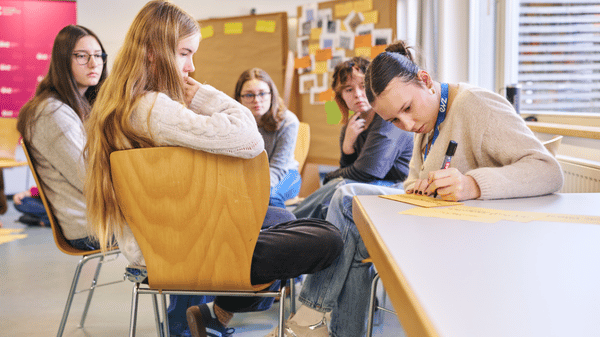
Historylab is an educational program run by the EVZ Foundation for young people who want to critically engage with the history of National Socialism and reflect on its relevance to the present. Participants are currently implementing the third round of projects, developing formats that connect historical research with contemporary issues. Workshops, digital interventions, exhibitions, and artistic approaches bring to light perspectives that are often missing from remembrance, thereby creating concrete opportunities for dialogue and participation.
As a special spin-off of Historylab, 12 volunteers aged 14 to 19 from six towns in and outside Thuringia organized a commemorative event marking the 81st anniversary of the liberation of Ohrdruf subcamp. Based on their own research, they developed a program on site that put contemporary issues of remembrance and responsibility into historical context. Some 80 people took part in tours, workshops, and discussions, contributing their perspectives and demonstrating how young people can actively shape remembrance today.
|
|
|
Find out more about Historylab projects
|
| |
|
|
EVENT FOR YOUNG CHANGE-MAKERS
|
|
|
EVZ Foundation Civic Action Summer School 2026
|
|
|
|
| |
This summer sees a special highlight for individuals engaged in civil society who are aged between 18 and 35 – the Civic Action Summer School. To be held in Weimar from August 10 to 14, it provides tools and learning opportunities to develop initiatives and strengthen the diversity and resilience of democratic civil societies in Europe.
Even when they are interested and motivated, young people in particular often lack opportunities, resources, and pathways to pursue engagement and participation. At the same time, they increasingly face shrinking civic space and challenges to democratic civil society from far-right actors and authoritarian regimes across Europe. The Civic Action Summer School explores the challenges and opportunities facing young civic engagement and its actors, with a focus on practical empowerment. Through hands-on workshops tailored to participants’ needs, as well as facilitated dialogue, participants can gain or expand skills in project design, implementation, and communication. In this way, the Summer School seeks to strengthen democratic engagement among young people.
|
|
|
See here for ongoing updates and information on how to get involved
|
| |
|
| |
|
|
| |
|
|
| |
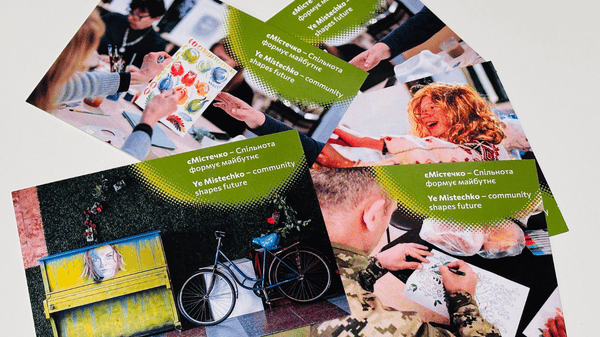
Messages of solidarity: EVZ Foundation postcard campaign at Cafe Kyiv in 2026
This year, the EVZ Foundation once again took part in Cafe Kyiv – one of the largest Ukraine-focused conferences in Europe. In addition to panel discussions and a film premiere, the Foundation set a special example of solidarity by initiating a postcard campaign: visitors were able to send personal messages to people in Ukraine and to so-called “third places”.
Supported through the YeMistechko program, these spaces – such as museums, libraries, and cultural centers – are developing into open places for encounter, dialogue, and mutual support. In the context of Russia’s war against Ukraine in particular, these spaces are of vital importance in terms of social cohesion.
The many postcards reflected a wide range of emotions – from compassion and solidarity to deep admiration – and made at least one thing clear: the people in Ukraine are not alone. For the EVZ Foundation, this is also a mandate to continue its active commitment to Ukrainian civil society. With this in mind, a jury recently recommended funding for 14 new and four ongoing “third place” projects.
|
|
Find out more about YeMistechko and the funded projects 
|
| |
|
|
Film tips
|
|
|
Antigypsyism and the NS persecution of Sinti and Roma in film
|
|
|
|
| |
|
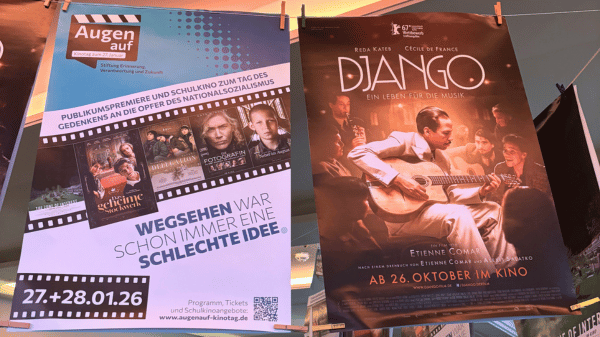
For a long time, the history of the persecution of Sinti and Roma remained largely neglected both in film and in society – even though more than 500,000 members of the minority were persecuted and murdered by the National Socialists. The film pool of the Eyes Open Cinema Day brings these perspectives into focus through a range of productions: Inspired by the biography of Ernst Lossa, Fog in August follows a Yenish youth who is involved in acts of resistance and ultimately becomes a victim of the National Socialists’ so-called “euthanasia” program and the T4 killings. Zirkuskind tells the story of Santino and his great-grandfather, exploring belonging and identity while addressing deeply rooted prejudices against Roma. Wesley schwimmt highlights the present-day experiences of the young boy Wesley involving racism and exclusion, while Django portrays Django Reinhardt, a Sinto jazz musician who was caught between persecution and artistic resilience. Accompanying teaching materials are available for all films. Developed in collaboration with VISION KINO, these enable in-depth educational work with school classes. Our film ambassador Erik presented the short filmWesley schwimmt in more detail on our Instagram channel. In addition, film ambassador Melissa interviewed Daniel Weißbrodt of ROMANO SUMNAL – Roma und Sinti Sachsen e. V. at the Eyes Open Cinema Day about the film Django and spoke to him about music under National Socialism as an instrument of power and resistance.
|
|
|
Explore the Eyes Open Cinema Day film pool
|
| |
|
| |
|
|
|
|
|
| |
|
Estera Stan, project manager of “Together we are stronger”
|
| |
The film “Together We Are Stronger”, produced as part of the EVZ-funded project of the same name and set to be screened on April 11 as part of Romnja* Power Month, makes it clear: Some of the women interviewed in the film have long been engaged in civil society, while others have only recently become active. But Sintize and Romnja have been part of the civil rights movement from the very beginning and continue to advocate against specific forms of multiple discrimination. What is the role of women in Sinti and Roma activism?
Women have always played a central role in the Roma and Sinti movements. These women are role models for younger generations – also for me personally. This should be recognized at two levels:
1. Romnja and Sintize were already active as survivors and descendants in remembrance policy, later also in struggles for residency rights, as well as in education and cultural work. But their contributions have not enjoyed sufficient visibility.
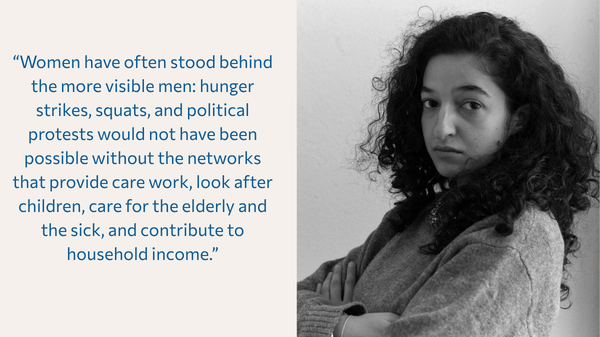
2. Women have often stood behind the more visible men: hunger strikes, squats, and political protests would not have been possible without the networks that provide care work, look after children, care for the elderly and the sick, and contribute to household income. Often coded as “female”, this work has sustained visible political activities but remains largely invisible and insufficiently recognized to this day. It is particularly problematic that although mainstream society has documented these political struggles, the women involved have hardly been photographed or interviewed. Within our network, many older women were involved in the major residency rights marches and protests of the 1990s, in the occupation of Dachau in 1993 and earlier in Neuengamme, in protests for the construction of the memorial in Berlin, in residency rights protests in the 2000s, and in protests against discriminatory “action plans” proposed by the Berlin Senate administration. Yet this is scarcely documented and has largely faded from historical memory.
|
|
Read the full interview

|
| |
|
MOTRA-Monitor reveals new findings: openness to far-right extremism is increasing significantly
The new MOTRA-Monitor 2024/25, coordinated by the Federal Criminal Police Office, shows that societal crises are intensifying radicalization in Germany. Openness to far-right attitudes increased from 21.8 percent (2021) to 29.6 percent (2025) – particularly among younger people. Around one-third of the younger generation is receptive to authoritarian, far-right ideas.
Politically motivated crime reached a new peak in 2024, with around 100 offenses per 100,000 inhabitants, while bias-motivated violence has increased by 77 percent since 2020. Attitudes that are explicitly antisemitic (7.2 percent) and anti-Muslim (28.3 percent) have also become significantly more widespread.
The greatest threat to our democracy comes from far-right ideologies rooted in exclusion, discrimination, and hostility toward others. But there is also a positive signal that emerges: 85.6 percent of respondents support the fundamental principles of a liberal, rule-of-law-based democracy.
Through its funding programs, the EVZ Foundation seeks to strengthen democratic values across Europe by supporting civil society initiatives and projects that combat antisemitism, racism, and antigypsyism.
|
| |
|
|
NEWSLETTER OF THE HOUSE OF THE WANNSEE CONFERENCE MEMORIAL AND EDUCATIONAL SITE
|
| |
“Memory culture is identity politics” |
| |
|
In her book Beklaute Frauen and in her social media work, historian and journalist Leonie Schöler combines historical knowledge with a gender-critical perspective. She writes about women and marginalized groups whose contributions have been systematically overlooked. In doing so, she focuses particularly on human rights violations and perspectives that are missing in historiography. Drawing on the example of resistance fighter Noor Inayat Khan, Schöler shows how diverse identities can open up new approaches to remembrance. She also criticizes dominant narratives of memory culture: figures such as Anne Frank and Sophie Scholl embody simplified, broadly accessible stories, while more complex perspectives – such as Jewish resistance or societal complicity – are often left out.
|
| |
Read now

|
| |
| |
|
|
SPIEGEL
|
| |
|
“Here you can find out what your grandparents did during the Nazi era”
|
| |
|
For the first time, a large collection of digitized NSDAP membership records has been made publicly accessible: the complete digital copy of the NSDAP’s central index and local group index is now available online, microfilmed after the war and comprising more than 16 million entries. Using this database maintained by the US National Archives, anyone can now research whether their ancestors were members of the NSDAP up to 1945. Historians emphasize that this is “raw historical material”: the presence of an entry does not allow for simple conclusions about personal beliefs, and the absence of an entry does not automatically exonerate the individual concerned. Further research remains necessary in order to be able to arrive at a well-founded assessment – such as reference to the German Federal Archives.
|
| |
|
Read now
|
| |
| |
|
|
APRIL 11, BERLIN
|
| |
|
Film premiere „Gemeinsam sind wir stärker“
|
| |
|
As part of Romnja* Power Month, a RomaniPhen e. V. initiative, the documentary Gemeinsam sind wir stärker [Together we are stronger] premieres at Aquarium in Berlin-Kreuzberg. Produced as part of the EVZ-funded project of the same name, the film looks at the current situation of Sinti and Roma in Germany as well as shedding light on intergenerational activism. For further insights into the project, see the interview with project manager Estera Stan in the section 3 Questions for … . The screening will be followed by a Q&A with the filmmakers, and the Power Month will be rounded off with an official closing event at Südblock.
|
| |
|
Explore all Romnja* Power Month events
|
| |
| |
|
|
APRIL 13, KYIV
|
| |
|
Exhibition opening in Kyiv: A Ukrainian Jewish Century
|
| |
|
The exhibition A Ukrainian Jewish Century – Pictures and Stories from 1920 to 2025 by Centropa opens at the Babyn Yar National Historical Memorial Preserve. Based on some 260 interviews and more than 3,000 historical photographs, it tells the story of a century of Jewish life in Ukraine – from the period before the Holocaust through to the present day. The focus is on personal stories, social transformations, and present-day experience in the context of Russia’s war against Ukraine.
|
| |
|
Find out more about the National Historical and Memorial Reserve Babyn Yar
|
| |
| |
|
|
APRIL 15, BERLIN
|
| |
|
Film screening and tour with Holocaust survivor Andrei Ivanovich Moiseenko
|
| |
The EVZ Foundation is supporting the three-week tour of Andrei Ivanovich Moiseenko, which includes stops at numerous locations across Germany. Born in Ukraine, Moiseenko was deported to Leipzig as a teenager for forced labor and survived both Buchenwald concentration camp and Wansleben subcamp. He now lives in Minsk.
At all stops, the award-winning documentary Ja, Andrei Iwanowitsch will be shown in the presence of Andrei Moiseenko and director Hannes Farlock, along with an exclusive preview of Alles was ich immer wollte war alles [All I ever wanted was everything]. In Berlin, the film will be screened free of charge at the cinema Kino Babylon in Mitte.
|
| |
|
Find out more about the tour
|
| |
| |
|
|
APRIL 18, SACHSENHAUSEN memorial
|
| |
|
Talks with historical eyewitnesses, guided tours, and an exhibition opening in Sachsenhausen
|
| |
|
To mark the 81st anniversary of the liberation of prisoners from Sachsenhausen concentration camp, Sachsenhausen Memorial and Museum will be hosting an extensive program from April 17 to 20. On April 18 the program will focus on guided tours and a testimony event with Bogdan Bartnikowski, as well as conversations with descendants. In addition, the exhibition Entangled histories – descendants tell their stories will open – an outcome of the Education Agenda NS-Injustice project What voice do we have.
|
| |
|
View the program
|
| |
| |
|
|
ON AND AROUND MAY 8
|
| |
|
Commemoration in Hamburg: encounters with historical eyewitnesses
|
| |
|
To mark the 81st anniversary of the liberation of prisoners from Neuengamme concentration camp, the Foundation of Hamburg Memorials and Learning Centers Commemorating the Victims of Nazi Crimes is hosting a wide-ranging program of discussions and tours on and around May 8. In connection with the funding program Encounters with Historical Eyewitnesses, the EVZ Foundation is supporting the participation of two survivors: Helga Melmed, who survived several concentration camps including Auschwitz and Neuengamme, and Barbara Piotrowska, whose family was deported to Neuengamme after the Warsaw Uprising and who herself survived Ravensbrück concentration camp.
|
| |
|
View the program
|
| |
| |
|
| issue 05/2026 |
|
| Our next issue comes out at the beginning of May! |
|
|
| |
| Once again, the upcoming issue will present the themes and content of the Education Agenda NS-Injustice: Stay tuned! |
|
| All issues at a glance
|
| |
|
|
|
|
|
|
Stiftung Erinnerung,
Verantwortung und Zukunft
Friedrichstraße 200
10117 Berlin, Germany
T +49 (30) 25 92 97-0
F +49 (30) 25 92 97-11
Website
|
| |
|
Responsible:
Dr. Andrea Despot and Jakob Meyer
Editorial:
Sophie Ziegler, Katrin Kowark, Jana Bültge
Image Credits:
Maryna Chaika, Nihad Nino Pušija, Jonas Ratermann, Anna Schroll, Hannes Meier / Ha Phuong Nguyen Thi, Jana Bültge, Andrii Volgin
|
| |
|
|
|
|
|
Follow us
|
| |
|
|
|
|
|
|
|
The editorial team welcomes your opinion on the newsletter and will be happy to answer any questions. We also help with any issues you might encounter: newsletter@stiftung-evz.de
You are receiving this e-mail because you have subscribed to the newsletter of the EVZ Foundation. You can unsubscribe from this information service at any time. To unsubscribe, click here
|
|
|
If you are unable to click the link, please forward this newsletter to newsletter@stiftung-evz.de with the subject line "Unsubscribe".
|
|
|
|
|
|