New funding round under the Education Agenda NS-Injustice: the selection process is underway
By the end of 2025, more than 200 project ideas had been submitted to the EVZ Foundation in the field of non-formal historical-political education – an impressive response to the current call for applications.
Following careful review, some 60 promising project executing agencies were invited to submit full applications in late January 2026, and in May 2026 an expert jury made up of academics and practitioners will assess the applications received. Based on the jury’s recommendations, the EVZ Foundation will submit the projects to its Board of Trustees for approval. The final funding decision will be made by the Federal Ministry of Finance as the funding organization of the Education Agenda NS-Injustice.
Before the new projects are launched in summer 2026, this is a good moment to look back at the projects and outcomes of the first funding phase. In our magazine on the Education Agenda NS-Injustice you will also find interviews, features and insights into the program’s key themes.
|
| |
|
|
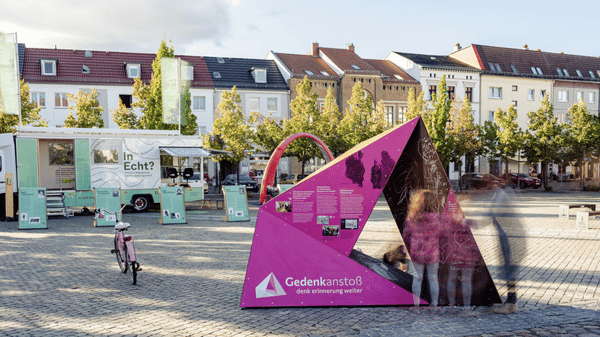
The polygon structures from the EVZ Foundation’s Gedenkanstoß exhibition are available for loan by project partners and executing organizations for their own exhibitions, for both indoor and outdoor use. Stored at the Foundation’s premises in Berlin, the steel structures can be individually printed with plastic panels.
|
| |
|
| FILM TIP |
|
The documentary THE UNSPOKEN continues its cinema tour! |
|
The documentary THE UNSPOKEN addresses the long silence in Germany after 1945 regarding involvement in and responsibility for the NS regime. The focus is on personal memories that continue to resonate today, as well as the perspectives of Jewish survivors. Directed by Patricia Hector and Lothar Herzog, the film was funded through the project of the same name under the Education Agenda. It is still being shown at selected cinemas across Germany. On May 8, the Day of Liberation and the end of World War II in Europe, the film will be screened in Berlin at Bali Kino. In addition to the screenings, the project offers workshops on the film for schools, educational institutions and organizations. These are available on individual request. |
|
Purchase tickets  |
| |
|
|
EXHIBITIONS ON TOUR
|
|
|
New dates: Education Agenda projects continue to have an impact
|
|
|
|
| |
|
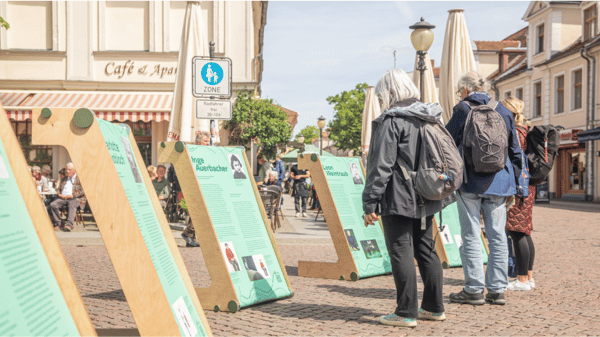
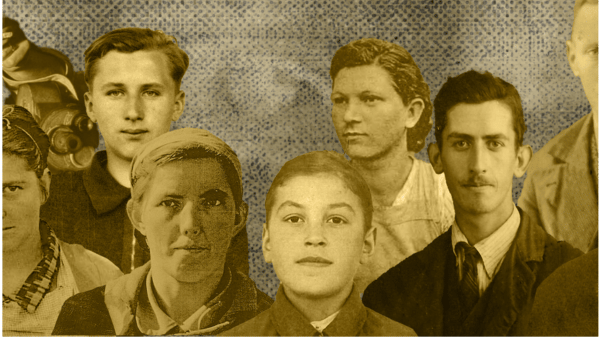
Created by Sandbostel Camp Memorial, the touring exhibition nevertheless here! tells the life stories of children born during World War II or in the early postwar period from so-called “forbidden relationships” between Germans and prisoners of war or forced laborers. On view until July 1, 2026 at the Gestapokeller and Augustaschacht Memorial, it highlights previously overlooked biographical experiences.
|
|
Find out more about the exhibition 
|
| |
|
|
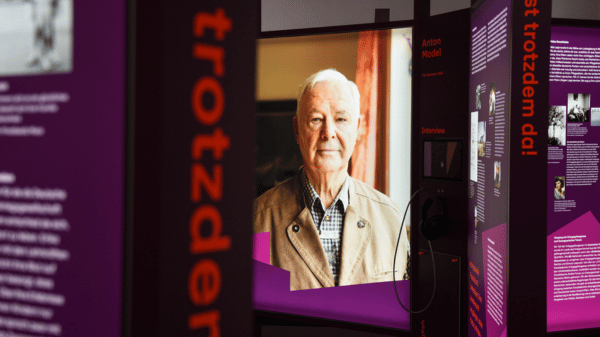
The touring exhibition For real? Virtual encounters with Nazi-era eyewitnesses by the Brandenburg Society for Culture and History enables immersive engagement with the life stories of the survivors of NS injustice. Using digital formats and VR headsets, it creates forward-looking approaches to remembrance and reflects on questions of mediation and authenticity. The exhibition will be on view from May 2 to October 4, 2026 at the Jewish Museum in Schwedt.
|
| |
|
Would you like to present the exhibitions at your museum, memorial site or school or in your organization? The two exhibitions are available for loan in the form of a complete package, in flexible modular formats, or in reduced versions.
|
| |
|
EVZ HISTODAY |
|
| Liberation Dance – flash mob to mark the day of liberation |
|
|
| |
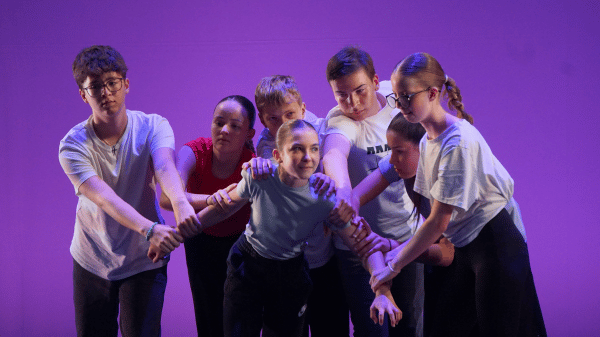
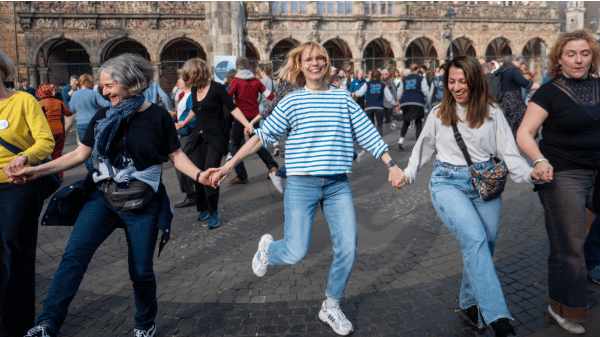
At 5:30 p.m. on May 8, the EVZ Foundation invites the public to dance together on Friedrichstrasse near Besselpark. Sending out a message of freedom and solidarity, the Liberation Dance commemorates the victims of the NS regime, including swing dancers and jazz musicians who were persecuted for their passion. Experienced swing dancers will lead the flash mob. No prior experience or registration is required. For anyone who wishes to prepare in advance, a tutorial is provided on our website.
The event forms part of the EVZ Histoday history festival marking the Foundation’s 25th anniversary under the motto NO TIME TO FORGET. This year, the Liberation Dance will also take place in Bremen, Hamburg, Cologne, Oldenburg and Prague. |
|
| Don´t miss out |
| |
|
| Youth ENGAGEMENT |
|
Civic Action Summer School – Call for Participation |
|
|
| |
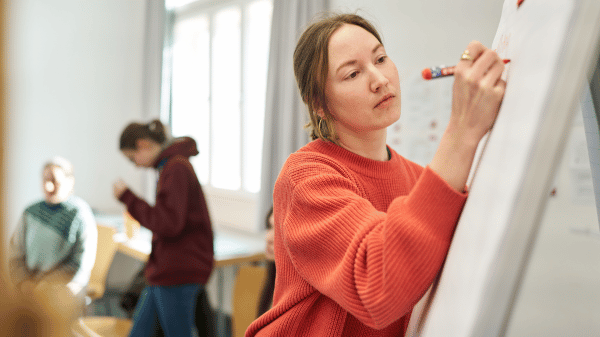
From August 10 to 14, the EVZ Foundation’s Civic Action Summer School will bring together committed young people from across Europe in Weimar. The program offers space to explore questions of democracy, memory culture and civic engagement while also enabling participants to focus specifically on refining their own initiatives.
In light of the growing challenges facing democratic civil societies in Europe, the Summer School focuses on hands-on empowerment: Through workshops and peer exchange, participants will hone their skills in project design, implementation and communication.
Are you aged between 18 and 35, based in Europe, have some initial experience of civic engagement and are interested in taking part in an inspiring week focused on civic action? |
|
| If so, sign up now! |
| |
|
| TOURO UNIVERSITY BERLIN |
|
Interactive memory workshop: reparations from the perspective of contemporary witnesses |
|
On May 28, 2026, Touro University Berlin and the International Auschwitz Committee will be hosting a special remembrance workshop at the German Resistance Memorial Center. Its main focus will be more than 50 interviews with Holocaust survivors and their families from Poland, Germany, Israel, Belgium and the former Soviet Union, conducted as part of the Education Agenda project The Impact of Reparations. Participants will explore the material through audio and video analysis, contextual displays and personal memory message cards, thereby developing new approaches to multi-perspective education.
The workshop runs from 2:00 p.m. to 5:30 p.m. and is aimed at educators, multipliers in historical-political education, and professionals who work at memorial sites and educational institutions. At 6:00 p.m., the book Die Wirkung der Wiedergutmachung. Internationale Perspektiven auf die Erfahrungsgeschichte der deutschen Entschädigung für nationalsozialistisches Unrecht [The Impact of Reparations: International Perspectives on the History of German Compensation for Nazi Injustices] will be publicly presented. |
|
| Further details and registration |
| |
|
| DIAKONIE MÜNCHEN UND OBERBAYERN |
|
Despised – persecuted – forgotten: digital learning portal on NS health policy |
|
|
| |
Who were the people stigmatized by the NS regime as “genetically and socially inferior”? A new interactive learning portal developed by Lernort Sozialdorf Herzogsägmühle gives them a voice.
Through digital modules, survivors and their descendants tell their own stories, conveying the brutality of NS health policy in a direct and immediate way. In addition to victim perspectives, the portal also examines perpetrator biographies and the bureaucratic processes behind the crimes.
Aimed primarily at professionals in social work and healthcare, the project links historical questions with present-day challenges. How does history shape our society today? And what impact does it have on work in the social and healthcare sectors? |
|
| To the learning portal |
| |
|
New RIAS report: significant increase in antisemitism at NS memorial sites
NS memorial sites are key places of historical-political education in Germany. A new publication by RIAS shows that these sites are increasingly being targeted by antisemitic incidents and used as spaces onto which broader social conflicts are projected. 211 antisemitic incidents were documented nationwide at NS memorial sites in 2024, nearly double the number recorded the previous year.
There is clearly an ongoing trend here: even without complete data for 2025, memorial sites and reporting organizations have evidence of persistently high numbers of cases and ongoing disruptions. Documented incidents range from seemingly minor boundary violations to targeted attacks on the work of these institutions: antisemitic graffiti and vandalism at exhibitions and memorial sites, disruptions of tours and educational programs, derogatory or dismissive entries in guest books, as well as verbal attacks and threats against staff. According to RIAS, a significant proportion of these incidents reflect post-Shoah antisemitism that is linked to antisemitic efforts to deflect or undermine remembrance, or situated in the context of Israel-related antisemitism.
This dynamic can also be seen in developments at specific memorial sites. The Sachsenhausen Memorial reported an increase from 12 incidents in 2022 to 52 in 2024, for example.
The figures show that these are not isolated escalations but part of a recurring pattern. Given the declining number of historical eyewitnesses, historical-political education faces increasing challenges while at the same time being more urgently needed than ever. Memorial sites are central places of fact-based remembrance: it is our responsibility to strengthen them and show solidarity with those affected.
|
| |
|
| |
|
| |
|
| |
Exhibition opening Verflochtene Geschichten. Nachkommen erzählen [Entangled histories – descendants tell their stories] at Sachsenhausen Memorial
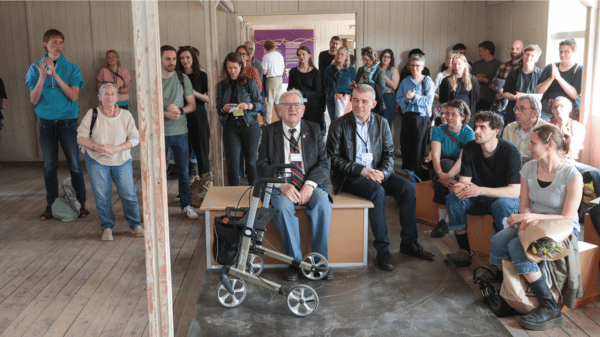
To mark the 81st anniversary of the liberation of the prisoners of Sachsenhausen concentration camp, an exhibition was opened entitled Verflochtene Geschichten. Nachkommen erzählen. It focuses on the relatives of former Sachsenhausen prisoners, including Kelsey Snook (USA), Jakob Feisthauer (Germany), Nicole Wines (USA), Julie Somers (USA) and Alisa Smith-Neuhaus (USA/Germany), who were also present at the opening. The exhibition follows them in their search for their family histories, showing how the experience of exclusion, persecution and violence continues to have an impact across generations.
The opening was also attended by Bogdan Bartnikowski, seen in the center of the photo: he was deported to Auschwitz-Birkenau after the Warsaw Uprising as a child, and later transferred to a satellite camp of Sachsenhausen concentration camp. Bartnikowski is among the last Holocaust survivors who are still able to talk about their experiences on site and engage directly with visitors. The exhibition was developed as part of the Education Agenda NS-Injustice project Welche Stimme haben wir? [What voice do we have?]. |
|
| Find out more about the project |
| |
|
| Jüdische allgemeine |
|
| Holocaust survivor Andrei Moiseenko tours Saxony to mark his 100th birthday |
|
| Born in Ukraine, historical eyewitness Moiseenko was deported to Leipzig as a teenager to do forced labor, going on to survive both Buchenwald concentration camp and Wansleben satellite camp. Today he lives in Minsk. The EVZ Foundation is supporting his tour of Germany, which will include visits to schools and cinemas in cities such as Leipzig, Dresden, Chemnitz, Hoyerswerda and Bautzen. There is considerable interest in the centenarian’s testimony, with more than 2,300 school students having signed up in Dresden alone. The tour also features the documentary Ja, Andrei Iwanowitsch [Yes, Andrei Ivanovich] as well as a preview of the upcoming film Alles was ich immer wollte, war alles [All I ever wanted was everything]. |
|
| Read article |
| |
|
| REPORTING AND INFORMATION CENTER ON ANTIGYPSYISM (MIA) |
|
| Using the law to combat antigypsyism |
|
| A new focus report published by the Reporting and Information Center on Antigypsyism (MIA) shows how the denial and non-recognition of antigypsyism influence court rulings. “The report repeatedly shows that specialized public prosecutors’ offices for hate crime have a key role to play thanks to their expertise, and that in general, more training and awareness-raising are needed,” says Dr. Guillermo Ruiz, executive director of MIA. |
|
| Read the report |
| |
|
| DEMOC |
|
| Far-right youth groups in Germany |
|
| The new generation of German neo-Nazis tends to be highly action-oriented and willing to use violence. What is more, the individuals involved are often very young. Democ, an organization that monitors and analyzes anti-democratic movements, has published a new guide on this topic which particularly sheds light on the processes behind mobilization, online networking and offline threats. Democ warns that sensationalist reporting may inadvertently reinforce the self-image of these young neo-Nazis. One effective countermeasure here could be deplatforming, i.e. the targeted removal of accounts and content from social media by the platforms themselves. |
|
| Read the guide |
| |
|
| |
|
|
|
| |
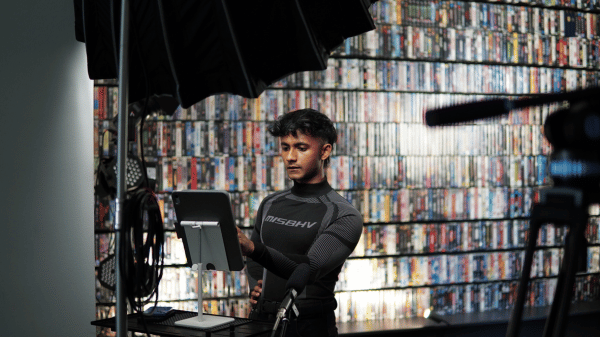
Rafid Kabir, civic educator and content creator |
| |
Rafid Kabir has been creating content on political and civic education on TikTok and Instagram for five years. In his videos, he addresses topics such as racism, antisemitism, discrimination and other socially relevant issues. In addition to his work as a content creator, he also supports digital campaigns, projects and funding initiatives in the field of civic education.
For the Education Agenda NS-Injustice, he presents selected projects and topics on Instagram and TikTok.
You’re currently presenting selected projects from the Education Agenda NS-Injustice on TikTok and Instagram. Which project impressed you most and why?
To be honest, that’s quite a difficult question to answer because I found all the projects interesting in their own way. What particularly impressed me was to see how creative and modern memory culture can be, and how it can offer a perspective on the future, too. That’s why I found the theater projects particularly powerful. The Frankfurt History App and the digital atlas on NS crimes NaziCrimeAtlas) also left a lasting impression because they present history in a new, accessible and very contemporary way. |
|
| Read more |
| |
|
| NEWSLETTER 06/2026 |
|
| Our next issue comes out at the beginning of June! |
|
|
| |
| In the next issue, we will once again provide updates on projects, upcoming events and future funding calls issued by the EVZ Foundation. |
|
All issues at a glance  |
| |
|
|
|
|
|
|
Stiftung Erinnerung,
Verantwortung und Zukunft
Friedrichstraße 200
10117 Berlin, Germany
T +49 (30) 25 92 97-0
F +49 (30) 25 92 97-11
Website
|
| |
|
Responsible:
Dr. Andrea Despot and Jakob Meyer
Editorial:
Sophie Ziegler, Katrin Kowark, Sarah Keller, Jana Bültge
Image Credits:
Adam Sevens, Andreas Nicolaus Vetrone, Moritz Röber, Johanna Becker, Karsten Schirmer/Stiftung Brandenburgische Gedenkstätten, Anna Schroll, TINCON/Jonas Walzberg
|
| |
|
|
|
|
|
Follow us
|
| |
|
|
|
|
|
|
|
The editorial team welcomes your opinion on the newsletter and will be happy to answer any questions. We also help with any issues you might encounter: newsletter@stiftung-evz.de
You are receiving this e-mail because you have subscribed to the newsletter of the EVZ Foundation. You can unsubscribe from this information service at any time. To unsubscribe, click here
|
|
|
If you are unable to click the link, please forward this newsletter to newsletter@stiftung-evz.de with the subject line "Unsubscribe".
|
|
|
|
|
|
| © Stiftung Erinnerung, Verantwortung und Zukunft, 2026 |
|
|
|
|
|
|