|
EVZ Histoday 2026: international perspectives, remembrance through dance
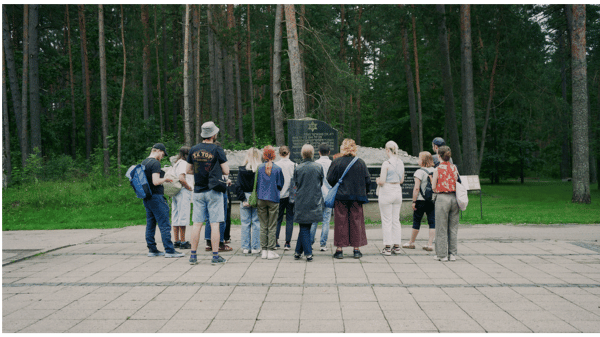
The European history festival brought people from 15 countries together in Berlin on May 7 and 8 to mark the EVZ Foundation’s anniversary year. In the course of around 30 sessions under the motto NO TIME TO FORGET, multipliers, cultural practitioners and young changemakers discussed historical revisionism, contested memory politics and new approaches to historical learning.
The opening event itself combined discussion and culture in a particularly engaging way: the Jewish puppet theater Bubales addressed questions surrounding German-Israeli relations with both humor and sharp insight, while In her keynote address, Dr. Ljiljana Radonić demonstrated how authoritarian regimes reinterpret historical facts and stereotype or marginalize victim groups in post-socialist memorial museums. Further perspectives on contemporary memory culture were offered by workshops on the persecution of Germany’s swing-loving youth, antisemitism in East Germany, and inclusive memorial site work.
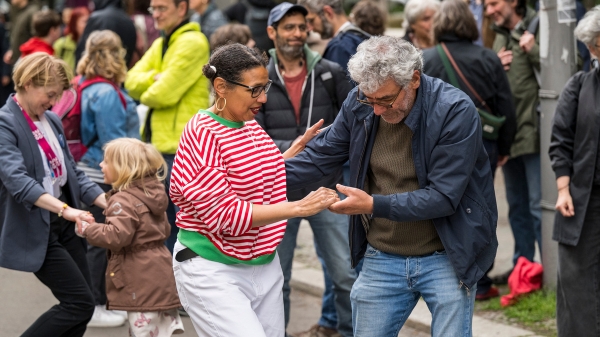
Histoday saw its climax on May 8, the anniversary of the liberation from National Socialism. At the Liberation Dance on Berlin’s Friedrichstrasse – which took place simultaneously in Bremen, Hamburg, Cologne, Oldenburg and Prague – barely 750 participants danced to a version of Jeepers Creepers by Louis Armstrong in memory of the young swing and jazz enthusiasts persecuted during the Nazi era.
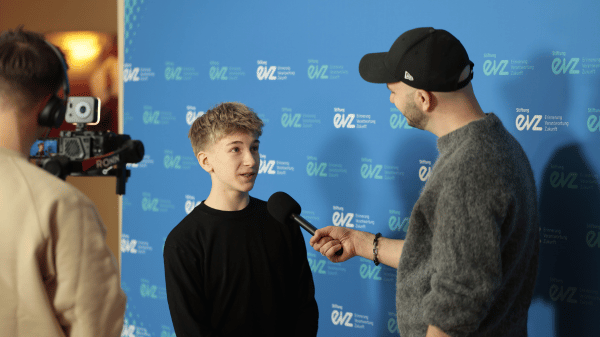
EVZ Young Voice Luzie Kothera reported as a journalist on both days, and she shares her impressions of Histoday in her blog post. She met Liberation Dance initiators Natalie Reinsch and Philipp Mangels of Swing Man Tau e. V. to discuss the origins of the format and the significance of collective remembrance initiatives.
In the press section of this issue, you will find two articles on Histoday and on jazz as an act of resistance during the Nazi era.
|
| |
|
|
ANNIVERSARY FUNDING PROGRAM
|
|
|
Projects launched in support of survivors of NS persecution from the former Soviet Union
|
|
|
|
| |
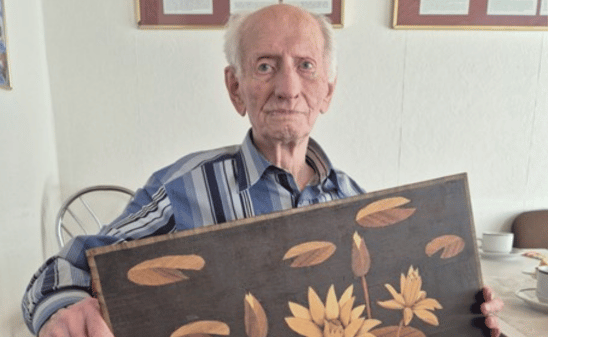
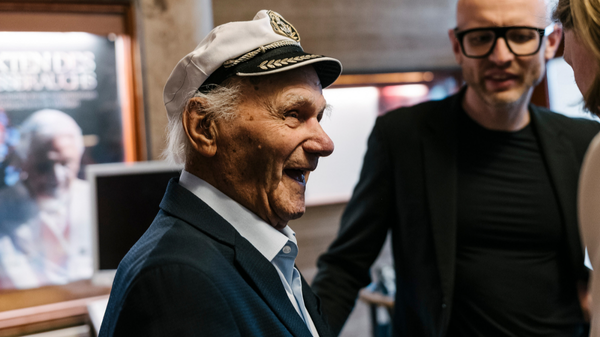
In order to mark its 25th anniversary, the EVZ Foundation launched the NO TIME TO FORGET funding program, which is aimed at survivors of National Socialist persecution from countries of the former Soviet Union who now live in Germany. The first phase involves support for nine projects with a granted amount of EUR 1.28 million. One of the project executing agencies in receipt of funding is the Jewish Community of Dessau with its project Bridges of the soul – a project connecting past and present. The project will support approximately 48 survivors of National Socialism from the former Soviet Union over a period of two and a half years. The EVZ Foundation recently visited participants in Dessau and Wittenberg, where cultural events, lectures and interest groups are to be organized, including a cooking club and an arts and crafts group.
The photograph shows 101-year-old Isaak Donda presenting a wooden artwork he created himself.
|
|
Find out more 
|
| |
|
|
ANNIVERSARY
|
|
|
From the first payments through to the present day: 25 years of the EVZ Foundation
|
|
|
|
| |
|
The first payments to former forced laborers were made by the Czech partner organization on June 13, 2001, just under a year after the EVZ Foundation was established in 2000.
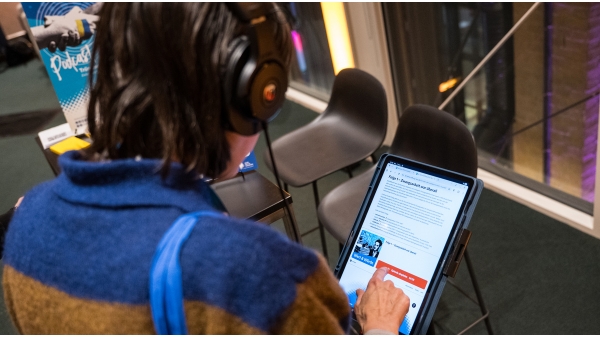
In the third episode of the podcast Value & Dignity At the Eleventh Hour, Darina Sedláčková of the Czech-German Future Fund talks about the first information campaigns regarding the application process, the extensive research and archival work that was done, the on-site payment procedures, and the early stages of cooperation with colleagues in Germany.
Between 2001 and 2007, the EVZ Foundation paid out a total of EUR 4.4 billion in compensation to more than 1.66 million former forced laborers and their legal heirs in almost 100 countries.
Over the course of the last 25 years, the Foundation has developed numerous international funding schemes and educational programs in which dedicated young people critically reappraise the history of discrimination, injustice and exclusion, often in cooperation with survivors.
|
|
|
Find out more about the Foundation’s anniversary events, content formats and activities
|
| |
|
|
NEW CALL FOR APPLICATIONS
|
|
|
YOUNG PEOPLE remember international – exchanges
|
|
|
|
| |
With funding from the German Federal Foreign Office, the EVZ Foundation supports international exchange projects for young people aged 18 to 35 from Germany, Europe and Israel. The focus is on encounters at sites of National Socialist persecution and extermination that strengthen mutual understanding, self-efficacy and democratic engagement.
Supported activities include bilateral and multilateral projects such as seminars, summer schools, work camps and study trips that are designed to be participatory, creative and connected to participants’ lived realities. Particular emphasis is placed on young professionals, non-academic trainees, and the relatives and descendants of those who suffered persecution under the National Socialists. The projects aim to create space for engagement with differing historical narratives and current memory politics in Europe and Israel while fostering international cooperation on an equal footing.
|
|
|
Apply by July 5
|
| |
|
|
EVENT FOR YOUNG CHANGEMAKERS
|
|
|
Last call for the Civic Action Summer School!
|
|
|
|
| |
|
From August 10 to 14, 2026, young civil society actors from across Europe will come together in Weimar to network, learn from one another and work on further developing their projects. The Summer School is aimed at people aged 18 to 35 who wish to play an active role in shaping democracy, particularly at a time of increasing shrinking spaces and growing challenges to democratic civil society by far-right actors and autocratic regimes across Europe. Through hands-on workshops and moderated interactive formats, participants will enhance their skills in project design, communication, and the implementation of civic engagement initiatives. Join a European network dedicated to democratic participation!
|
|
|
Sign up now before it’s too late!
|
| |
|
|
MEMO STUDIEs
|
|
|
New MEMO discussion cards: starting conversations through remembrance
|
|
Funded by the EVZ Foundation and developed by ConflictA, the MEMO discussion card set Through remembrance builds on the findings of the MEMO studies on memory culture in Germany. The 50 question cards invite participants to engage openly and accessibly with Germany’s National Socialist past, their own family histories and the current debate on memory culture. Topics include personal approaches to remembrance, historical continuities and revisionist attacks on history.
The card set is suitable for educational and learning settings as well as discussions among friends and family. Autobiographical learning that incorporates historical eyewitnesses perspectives allows new spaces for reflection and dialogue to emerge.
|
|
|
Order from mid-June 2026 or download and print your own copy
|
| |
|
|
FILM UNIVERSITY BABELSBERG KONRAD WOLF
|
|
|
Professional development program and summer school on film and immersive media in commemorative work
|
|
|
|
| |
|
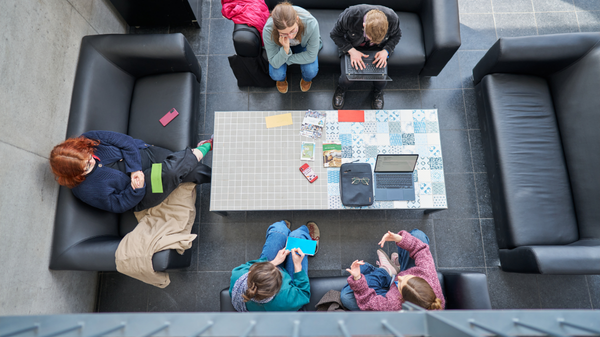
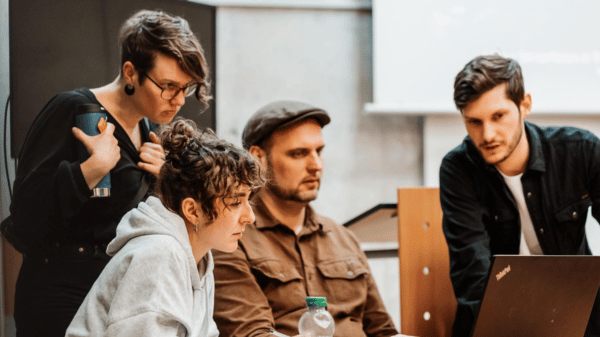
The effective integration of historical scholarship and contemporary media production is becoming increasingly important in public commemorative work. Funded by the EVZ Foundation, the Memory Media Lab will take place at Film University Babelsberg KONRAD WOLF from September 2026 to July 2027, offering memory culture practitioners the opportunity to strengthen their media and audiovisual skills at a professional level. The program equips participants to develop innovative and contemporary educational formats, create their own storytelling projects, and build a sustainable professional network.Offered either as a standalone module or as the opening component of the Memory Media Lab, the four-day summer school from September 7 to 10 explores the utopian potential of audiovisual remembrance, providing a space for intense professional dialogue and international networking.
|
|
|
Apply by June 28
|
| |
|
|
#notimetoforget
|
|
|
Congratulations to the winners of the photo competition 2026!
|
|
|
|
| |
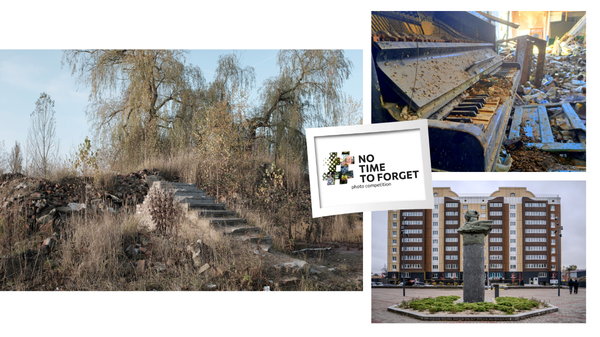
Under the hashtag #notimetoforget, the EVZ Foundation’s photography competition highlights the importance of memory culture in times of war, disinformation and social polarization. The award-winning photographs explore the connection between remembrance, loss and resilience.
Sven Ellerbrock’s photograph Laurahütte depicts the former labor camp Laurahütte in Siemianowice Śląskie, Poland, a satellite camp of Auschwitz where Jewish prisoners were forced to manufacture anti-aircraft weapons. Yulia Pidhola’s image War’s Note was taken in 2025 in Andriivka-Klevtsove in eastern Ukraine under life-threatening conditions during a renewed Russian invasion. Simone Vona’s photograph Scars of occupation documents the reconstruction of destroyed homes in Borodianka, Ukraine, which suffered severe damage during Russian air strikes in 2022.
Today, more than ever, there is NO TIME TO FORGET.
|
|
|
Explore more photographs
|
| |
|
|
Film pool of the Eyes Open Cinema Day
|
|
|
19 films that engage with the National Socialist past
|
|
|
|
| |
|
The film pool consists of films curated by an expert jury that provide accessible entry points to NS history, the Holocaust and memory culture – particularly for young people. In addition to synopses and trailers, the collection includes educational materials and teaching resources for classroom use. Topics include the persecution of Roma and Sinti as well as critical engagement with antigypsyism.
For younger students from grade 5 upwards, Norbert Lechner’s film Das geheime Stockwerk offers an engaging introduction to the National Socialist era through a time-travel narrative.
Major cinema releases such as Lee and The Zone of Interest provide very different approaches to portraying the Holocaust for older students, ranging from documentary-style immediacy to subtle storytelling and unseen violence.
Held each year on January 27, the International Day of Remembrance for the Victims of National Socialism, the Eyes Open Cinema Day will continue in 2027. Follow the EVZ Foundation on social media and through this newsletter for updates.
|
|
|
Explore the Eyes Open Cinema Day film pool
|
| |
|
|
encounters with survivors of National Socialist persecution
|
|
|
Moving encounters with historical eyewitnesses around May 8
|
|
|
|
| |
In April and May 2026, the EVZ Foundation once again supported projects dedicated to organizing encounters with survivors of National Socialist persecution from Belarus, Belgium, Germany, Israel, Poland and the United States. Events took place at the Bullenhuser Damm Memorial Site in Hamburg, for example, and also in connection with commemorations marking the 81st anniversary of liberation at the Neuengamme, Sachsenhausen and Ravensbrück Concentration Camp Memorial Sites.
In early May every year, the City of Chemnitz welcomes the children, grandchildren and great-grandchildren of Jewish people who were expelled from Chemnitz under National Socialism. The on-site discussions and public events involved Tana Sachs, born in 1938 and believed to be the last Jewish child born in Chemnitz before the Shoah, and Uri Guttmann, who fled Chemnitz with his mother in 1938.
One particular highlight was the three-week tour by Buchenwald survivor Andrei Ivanovich Moiseenko, supported by the EVZ Foundation, which included visits to schools and cinemas throughout Germany. On May 1, Moiseenko celebrated his 100th birthday at the National Theater in Weimar, together with prominent guests and to the sound of punk music.
|
|
|
Explore the funding program
|
| |
|
| |
|
|
|
|
|
| |
|
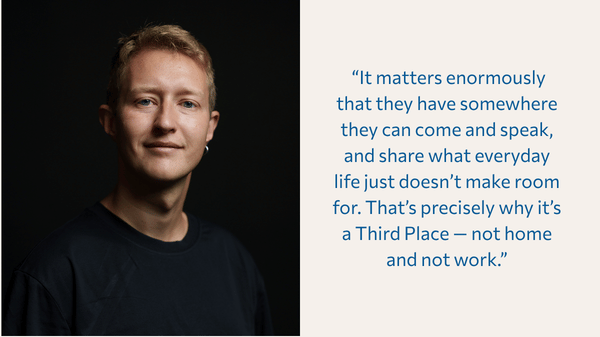
Serhii Korovayny, photographer of Third Places in Ukraine
|
| |
|
How does the Russian war against Ukraine affect the people you’ve encountered — and how does that show up in your photographs, especially in the way everyday life, war, and memory all come together?
War is people’s everyday reality. I keep coming back to this story from Okhtyrka, where I witnessed a lot of activity at a Third Place — various workshops for children, for adults, and so on. I was shooting everything, but the really candid conversation happened after everyone had gone home and maybe ten people were left, mostly older women. I asked them something about the beginning of the Russian war. Even though they weren’t occupied — since active combat there ended relatively quickly — people just started talking all at once, tripping over each other’s words: one had watched an armored personnel carrier roll past her house; another had fled through a field into the forest in the dark. And you can see it still hurts them deeply.
That’s exactly the value of these Third Places, it seems to me — people can not only do things there, but they can simply talk to one another. It matters enormously that they have somewhere they can come and speak, and share what everyday life just doesn’t make room for. That’s precisely why it’s a Third Space — not home and not work. It works effectively as a community-building place. And it was really powerful — listening to them, watching them finally get to say what they needed to say.
|
|
Read the full interview

|
| |
|
| |
|
|
|
|
|
| |
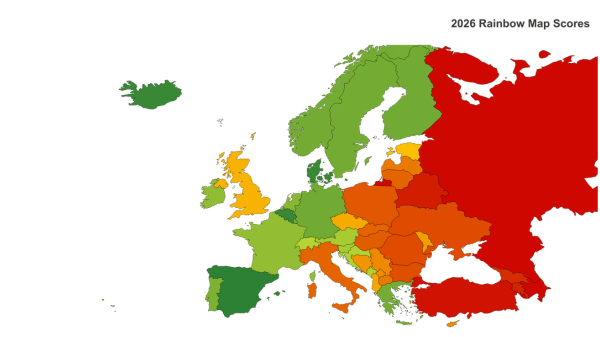
Rainbow Map warns of setbacks in LGBTIQ rights across Europe |
| |
|
The new Rainbow Map by ILGA-Europe highlights the wide disparities in the rights of LGBTIQ people across Europe. Forty-nine countries were assessed against 76 criteria, including anti-discrimination protections, safeguards against hate crime, family rights, asylum policies and legal gender recognition. For the first time, Spain tops the 2026 ranking, making it the most LGBTIQ-friendly country included in the survey, followed by Malta (88%) and Iceland (86%). At the bottom of the ranking are Russia and Azerbaijan with 2% each, and Turkey with 5%.
The findings reveal significant gaps in the protection of queer people. Seven countries provide no legal protection against discrimination, while only ten have banned so-called “conversion therapies”. Marriage equality exists in 22 countries, while 18 countries provide no legal recognition for same-sex couples. In at least 13 countries, queer communities face growing restrictions on their freedom of assembly and association.
Based on the work of more than 250 activists, legal experts and specialists from across Europe, the Rainbow Map provides transparent documentation of progress, setbacks and political attacks on LGBTIQ rights.
Together with ILGA-Europe, the EVZ Foundation supports four LGBTIQ organizations in Ukraine. The aim is to sustainably strengthen the civil society presence, public voice, and institutional and social engagement of the LGBTIQ movement in Ukraine.
|
|
Rainbow Map 2026 
|
| |
|
|
CENTRAL COUNCIL OF JEWS IN GERMANY
|
| |
Report on the situation of Jewish communities 2026: persistent threats are driving Jewish life out of the public sphere
|
| |
|
The latest report by the Central Council of Jews in Germany shows the extent to which antisemitism has changed the day-to-day lives of Jewish people since October 7, 2023. The study surveyed 102 Jewish communities and regional associations throughout Germany. 68% of communities report feeling less safe today than before, and almost one in two communities experienced antisemitic incidents during the past year. Only 35% still perceive solidarity within society at large, while just 13% view the future of Jewish life in Germany positively. Numerous communities also report that members refrain from visibly wearing Jewish symbols out of fear, also noting that events have been canceled or that security measures have had to be strengthened. Antisemitic hostility occurs both in public spaces and online.
|
| |
Read now

|
| |
| |
|
|
TAZ
|
| |
|
Dancing so as not to forget
|
| |
At the conclusion of EVZ Histoday on May 8, Berlin’s Friedrichstrasse was transformed into a place of living remembrance. The Liberation Dance involved around 200 people dancing the Charleston and swing together in memory of the young swing and jazz enthusiasts persecuted under National Socialism.
In an interview with taz, Maria Wilke of the EVZ Foundation explains that Germany’s swing-loving youth consciously resisted conformity to National Socialism through their music, dance and style of dress. Their open enthusiasm for a musical culture rooted in African American tradition was viewed by the Nazis as a provocation. As such, the Liberation Dance served as a visible expression of democratic solidarity today.
|
| |
|
Read now
|
| |
| |
|
|
Deutsche Welle
|
| |
|
Jazz was an act of resistance under National Socialism
|
| |
The Liberation Dance at EVZ Histoday on May 8 commemorated Germany’s young swing and jazz enthusiasts who were persecuted under National Socialism. While the Nazis denounced and banned jazz as “degenerate music,” many young people embraced swing as an expression of freedom and individuality.
“Totalitarian regimes have always suppressed art forms such as swing and jazz because they stand for individuality,” says historian and professional swing dancer Natalie Reinsch. Some young people were kept under surveillance, arrested or sent to concentration camps. Singing swing songs together was considered a courageous and life-threatening act of resistance.
|
| |
|
Read now
|
| |
| |
|
|
Der spiegel On youtube
|
| |
|
“Was Grandpa a Nazi?” – DER SPIEGEL discussion on memory culture and family history
|
| |
|
How do we talk about the National Socialist past in our own families today? Historian Götz Aly, author and content creator Susanne Siegert and journalist Hadija Haruna-Oelker explore this question in DER SPIEGEL’s discussion format Spitzengespräch. The conversation focuses on family complicity, social responsibility and approaches to remembrance that range from honest confrontation to symbolic “memory theater.”
|
| |
|
Watch now
|
| |
| |
|
|
JUNI 7, DÜSSELDORF
|
| |
|
Ilan Fiorentino Cup 2026: soccer, dialogue and live Israeli music
|
| |
|
The EVZ Foundation is supporting the participation of the Israeli delegation Vatikim in the 2026 Ilan Fiorentino Memorial Tournament in Düsseldorf. The players come from the Sha’ar HaNegev region in southern Israel and belong to communities directly affected by the Hamas terrorist attacks of October 7, 2023. Many have lost family members, friends or neighbors and are now using soccer as a space for community, mutual support and coping with traumatic experiences. The tournament commemorates Ilan Fiorentino, who was killed on October 7 while rescuing a child. In addition to the sporting competition, the program will also include dialogue events, educational activities and encounters with the Jewish community in North Rhine-Westphalia.
|
| |
|
Sign up now
|
| |
| |
|
|
JUNI 12, BÖHLEN AND BIRKENWERDER
|
| |
|
Two new memorial markers relating to local NS history at railway stations
|
| |
|
On June 12, two new sites of remembrance relating to National Socialist history will be inaugurated under the federally funded program MemoRails. In Böhlen, GERÄUSCHKULISSE e. V. and TELESKOP will unveil a memorial plaque at Böhlen railway station commemorating the thousands of NS forced laborers who worked in the Böhlen-Espenhain industrial complex. In Birkenwerder, Schlaglicht e. V. will join local elementary school students in inaugurating a memorial marker along the Brandenburg northern railway line – the Nordbahn. The two projects combine historical learning with local memory culture, raising public visibility of the history of NS forced labor, persecution and exclusion.
|
| |
|
Find out details and dates
|
| |
| |
|
|
JUNI 19 and 20, BERLIN
|
| |
|
Art meets remembrance: “Sound in the Silence – Raise your Voice” at Ravensbrück Memorial
|
| |
What happens when young people do more than learn about National Socialist history and instead engage with it through artistic practice?
This will be demonstrated in Ravensbrück this June by the international project Sound in the Silence – Raise Your Voice, which is funded by the Federal Government Commissioner for Culture and the Media (BKM) through the program YOUNG PEOPLE remember on site & committed. The project is inspired by the life story of Emmie Arbel, who survived the Ravensbrück and Bergen-Belsen concentration camps as a child. In developing the performance, students from the Free University of Berlin and Coburg University of Applied Sciences and Arts work together with artists to explore the question of what stance we should take toward the National Socialist past today.
Performances will take place at 5:00 p.m. on June 19 and at 11:00 a.m. on June 20; admission is free of charge. Audience members will have an opportunity to talk to the performers after the show.
|
| |
|
Find out more
|
| |
| |
|
|
JUNI 24, BERLIN
|
| |
|
New memorial in Berlin: inauguration of the memorial site for Jehovah’s Witnesses persecuted under National Socialism
|
| |
|
How familiar are we with the history of Jehovah’s Witnesses during the National Socialist era? They refused to give the Hitler salute, perform military service or join state organizations, and they were systematically persecuted as a result. Nearly 14,000 of these individuals were imprisoned and at least 1,750 lost their lives. It was not until 2023 that the Bundestag adopted a resolution to commemorate them with a dedicated memorial. At 11:00 a.m. on June 24, 2026, the memorial site will be officially inaugurated during a one-hour ceremony in Berlin’s Grosser Tiergarten. Its location beside the Goldfischteich (Goldfish Pond) is no coincidence: a major Gestapo arrest operation took place there in 1936.
Accompanying the memorial project, young people participating in the project Gedächtnis der Namenlosen [Memory of the nameless], funded through the YOUNG PEOPLE remember on site & committed program, are helping restore the identities of those who suffered persecution. They research biographies, collect historical photographs and place this material on an interactive map.
|
| |
|
Find out more
|
| |
| |
|
| Issue 07/2026 |
|
| Our next issue comes out at the beginning of July! |
|
|
| |
| Once again, the upcoming issue will present the themes and content of the Education Agenda NS-Injustice: dates, updates, and outcomes of EVZ projects. |
|
| All issues at a glance
|
| |
|
|
|
|
|
|
Stiftung Erinnerung,
Verantwortung und Zukunft
Friedrichstraße 200
10117 Berlin, Germany
T +49 (30) 25 92 97-0
F +49 (30) 25 92 97-11
Website
|
| |
|
Responsible:
Dr. Andrea Despot and Jakob Meyer
Editorial:
Sophie Ziegler, Katrin Kowark, Jana Bültge, Meret Aupperle, Selbi Ataeva
Image Credits:
ILGA-EUROPE, Stefanie Loos, Anna Schroll, Manuela Clemens, Sigrun Döring, Sebastian Gabsch, Alexander Gaidalym
|
| |
|
|
|
|
|
Follow us
|
| |
|
|
|
|
|
|
|
The editorial team welcomes your opinion on the newsletter and will be happy to answer any questions. We also help with any issues you might encounter: newsletter@stiftung-evz.de
You are receiving this e-mail because you have subscribed to the newsletter of the EVZ Foundation. You can unsubscribe from this information service at any time. To unsubscribe, click here
|
|
|
If you are unable to click the link, please forward this newsletter to newsletter@stiftung-evz.de with the subject line "Unsubscribe".
|
|
|
|
|
|