|
New Ideas for Remembrance: Education Agenda NS-Injustice Launches Second Call for Applications
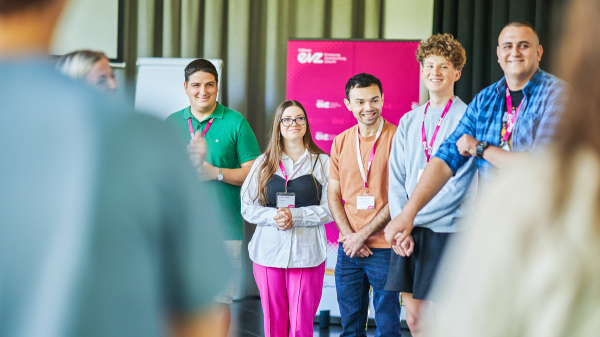
Organizations have until November 1, 2026, to submit project outlines for innovative projects in extracurricular historical-political education.
Subject to annual federal budget legislation, approximately 9 million euros will be available annually for projects in the years 2027 to 2029.
Remembering National Socialist injustice faces major challenges. With the loss of the survivor generation and the passing of time, knowledge about Nazi history and the Holocaust is decreasing; at the same time, historical revisionism and ideologies of inequality are gaining ground. This makes it all the more important to find new, effective ways of translating knowledge about Nazi crimes and the resulting responsibility into the present – especially for the younger generation.
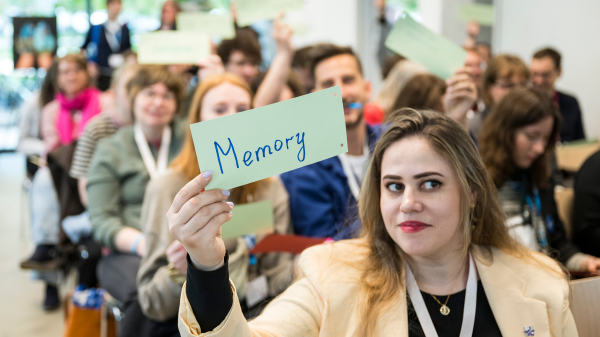
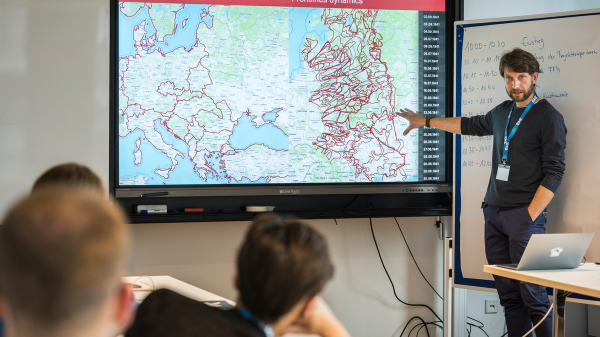
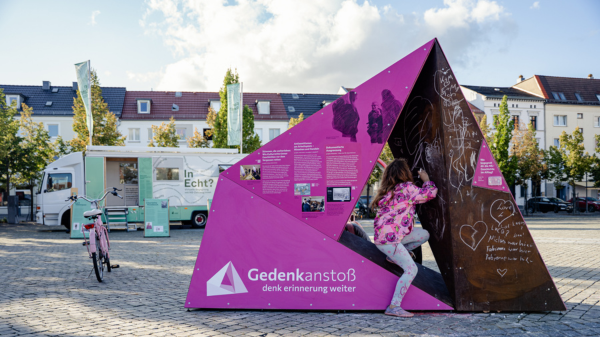
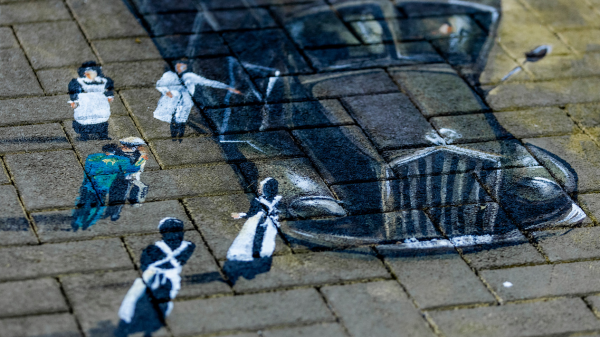
Funding is focused on extracurricular projects in the field of historical-political education that explore the history of National Socialismthrough contemporary formats, such as workshops, digital tools, exhibitions, artistic or biographical approaches, or the inclusion of historical eyewitnesses, testimonials, and descendants. The primary target audience is young people up to the age of 35 in Germany. These projects are to convey fact-based historical knowledge about Nazi injustice – particularly from the perspective of victim and persecuted groups, shed light on the causes and consequences of Nazi crimes, and strengthen historical awareness.
Prior to the submission of project outlines, the EVZ Foundation offers online consultation sessions.
|
| |
|
PROJEct launch |
|
| Against Drawing a Line Under the Past and Gaps in Knowledge on Nazi Injustice: 51 New Educational Projects Kick Off |
|
|
| |
Between July and October 2026, 51 new projects under the Education Agenda NS-Injustice will launch their work – with a total funding volume of just under 18 million euros.
The new projects address a wide range of topics and groups persecuted under National Socialism – including personal stories that have received little visibility until now. They will receive funding of between €150,000 and €500,000, with a term of up to 24 months. |
|
explore new projects  |
| |
|
| 2025 ACTIVITY REPORT |
|
Impact Stories: Award-Winning Education Agenda NS-Injustice Projects |
|
|
| |
The awards and nominations received by funded projects and partner organizations also demonstrate the profound impact that educational work on Nazi injustice has on society. In 2025, several projects from the Education Agenda NS-Injustice program were recognized for their innovative work.
The digital learning project “Wer ist Walter?” [Who is Walter?] was shortlisted for the DigAMus Award. The documentary film “Das Ungesagte” [The Unspoken] was nominated for the Granit – Hof Documentary Film Award at the Hof International Film Festival. The educational program “Informed, courageous, committed”, which focuses on preventing antisemitism in the workplace, was awarded the PHINEO Seal of Impact.
Whether digital, film-based, or blended learning: These accolades demonstrate how diverse educational work can be and how committed EVZ-funded organizations are to finding new ways to connect with people, convey knowledge, and ensure that critical engagement with Nazi injustice remains vital within our society in the here and now. Congratulations! |
|
| Learn more about these and other projects under the Education Agenda NS-Injustice in the EVZ Foundation’s 2025 Activity Report |
| |
|
| SCHULKINOWOCHEN (SCHOOL CINEMA WEEKS) IN THE FALL |
|
Film Education on the History and Contemporary Realities of Sinti and Roma |
|
The Education Agenda project “Neve paramisija | New Narratives” from the University of Heidelberg in cooperation with Romanity e.V. and VISION KINO – Network for Film and Media Literacy focuses on films that center the community's own perspectives to convey knowledge about the Nazi genocide of the Sinti and Roma, and about contemporary antigypsyism.
The first film screenings for school classes will take place in November 2026 as part of the SchulKinoWochen in Berlin, Baden-Württemberg, Hamburg, and Rhineland-Palatinate. |
|
| Find out more |
| |
|
UPCOMING EVENT |
|
EVZ Conversations x Museum für Kommunikation: “Never again and again and again” – Does AI Threaten Holocaust Remembrance? |
|
Fake, artificial intelligence-generated images of the Holocaust are increasingly flooding social media. Even for experts, it is becoming more difficult to distinguish authentic footage from manipulated content – so-called “AI slop”. The EVZ Foundation is hosting a public discussion at the Museum für Kommunikation in Berlin on September 22. Together with panelists from science and practice, the discussion will focus on how algorithms significantly influence the spread of fake content, the approaches with which historical-political education responds to this challenge, and the hopes pinned on the new EU AI Act – a comprehensive set of rules regulating the use of AI in the EU. |
|
| Sign up now! |
| |
|
NEW CALL FOR APPLICATION |
|
Remembrance Needs Places – and New Formats |
|
With its new memorial concept, the Federal Government is strengthening its culture of remembrance in Germany and creating new funding opportunities for the preservation of historic sites, digitalization, as well as research and innovative educational formats. Memorials and places of remembrance in Germany are invited to apply for project funding. Application forms for project funding based on the “Federal Government’s Concept for Memorials Commemorating the Nazi Reign of Terror and the SED Dictatorship” can be found on the website of the EVZ Foundation, which supports the call for applications. |
|
| View call for applications |
| |
|
|
|
Learning about Nazi “Euthanasia” Crimes: Three New Projects and Three New Approaches of the Education Agenda |
|
|
| |
| On September 1, we commemorate the victims of Nazi “Euthanasia” Crimes. Under “Aktion T4” alone (the Nazi mass-murder program targeting people with disabilities), more than 70,000 people were stigmatized as “unworthy of life” in 1940 and 1941 and murdered in the Bernburg, Brandenburg, Grafeneck, Hadamar, Hartheim, and Pirna-Sonnenstein killing centers. In total, more than 300,000 people across Europe fell victim to the Nazi "Euthanasia" Crimes.
How can we remember these crimes today and convey their contemporary relevance? Three new projects from the Education Agenda NS-Injustice focus on different areas and offer varied approaches:
“Verfolgte Vielfalt – Erinnern für eine inklusive Gesellschaft” [Persecuted Diversity – Remembering for an Inclusive Society] by Meppen adult education center sheds light on the multiple discrimination of victims of Nazi “Euthanasia” and aims to raise awareness among young people about historical and current forms of exclusion and intersectionality.
The project “MEMOR-I-ALL III – Normal. Anders. Sein.” [MEMOR-I-ALL III – Normal. Being. Different.] from Wiesbaden aims to make the stories of people persecuted due to their disabilities visible through installations, workshops, and multimedia formats and raise awareness of contemporary debates regarding the normalization of disability.
In their project “Digitale Gedenkspur Pirna” [Digital Memorial Trail Pirna], Aktion Zivilcourage e. V. connects biographies and sites associated with Nazi "Euthanasia" with the help of a curated learning map and makes it accessible to young people. |
|
| |
| |
|
| |
|
| |
|
| |
Civic Action Summer School: 29 Participants, 15 European Countries, 5 Days
The Civic Action Summer School in Weimar was a week full of inspiration, community, and shared learning! It highlighted youth engagement and their desire to help shape society and democracy with their own ideas. The participants explored the challenges and opportunities for youth engagement and worked on their own project ideas.
A participant gave the following account of her experience: “Throughout the summer school, I gained practical insights and inspiration on how to translate concerns and ideas into projects with significant social impact and at the same time had the opportunity to reflect on the big picture: the importance of democracy, human rights, civil society participation, and the socio-political realities shaping today’s Europe.” |
|
| Explore the EVZYoung Instagram channel |
| |
|
Using New Tools to Combat Online Hate and Disinformation
According to a Eurostat survey, 42 percent of internet users in the EU encountered online hate speech in 2025. The spread of disinformation is also increasing significantly.
While AI fuels online hate and disinformation, it can at the same time empower organizations that champion democratic values and solidarity with their community management. The new Chatbot ModSupport 2.0 developed by the Amadeu Antonio Foundation supports users who, for example, are seeking advice on comments under posts or escalating discussions. The AI application analyzes comments and suggests responses or courses of action for them. Unlike many other AI tools, ModSupport 2.0 stands out for its high level of data protection. Naturally, the tool cannot help with every question or challenge, which is why it also provides contacts for advisory organizations.
An upcoming e-learning course will help develop strategies and firm stances against historical revisionist hate campaigns in the digital sphere. It was developed as part of the joint project “Wirksam Widersprechen” [Countering Effectively] between Das NETTZ and the EVZ Foundation. The course is primarily aimed at project managers and communicators in historical educational work who are active in the digital space or want to become so. The course is expected to be available on the EVZ Academy – online platform starting this fall.
|
| |
|
| DEUTSCHE WELLE |
|
| Lest We Forget: Using AI to Remember the Genocide of Sinti and Roma |
|
| The genocide of Sinti and Roma by the National Socialists remains an overlooked chapter in the culture of remembrance. To keep this memory alive, the NGO “RomAnity” launched the film project “Unbroken.” The project, funded under Education Agenda NS-Injustice, involves actors portraying the history of the persecution of Sinti and Roma during the Holocaust. These portrayals are then transformed into anime animations using artificial intelligence. The aim is to make the memory of the genocide tangible and vivid, particularly for a younger audience. Beyond the historical examination, the project draws attention to the discrimination against Sinti and Roma that persists to this day. |
|
| Watch now |
| |
|
| leipziger zeitung |
|
| Photo Exhibition on Nazi Persecution and Deportation |
|
| Over 200,000 people were deported from the German Reich between 1938 and 1945. An exhibition displays historical photographs documenting the systematic and public persecutions and deportations. The exhibition is part of the #LastSeen research project, which was funded from 2021 to 2022 under the Education Agenda NS-Injustice. The project preserves, collects, and researches historical photographs of deportations. The visual sources prompt the following questions: How could public persecution and deportation take place? And who was watching? |
|
| Read article |
| |
|
| NORDDEUTSCHER RUNDFUNK |
|
| Swing Youth in the Crosshairs of the Nazi Regime |
|
During the Nazi era, a mass movement emerged among young people that resisted the regime's official youth education and instead embraced American swing. The Nazi regime viewed the non-conformist lifestyle of the Swing Youth as a provocation. From 1941 onwards, their persecution increasingly intensified: Young people were imprisoned, sent to concentration camps and labor education camps, or conscripted for the front.
The transnational project “Entartete Musik” [Degenerate Music] under the Education Agenda NS-Injustice focuses on the life stories of persecuted swing dancers and jazz musicians in Northwest Germany, the Czech Republic, and Poland and highlights a previously little-noticed form of youthful nonconformity and resistance. |
|
| Read article |
| |
|
| NEWSLETTER 10/2026 |
|
| Our next issue comes out at the beginning of October! |
|
|
| |
| In the next issue, we will once again report on project updates, upcoming events, and upcoming calls for applications in the EVZ Foundation's funding programs. |
|
All issues at a glance  |
| |
|
|
|
|
|
|
Stiftung Erinnerung,
Verantwortung und Zukunft
Friedrichstraße 200
10117 Berlin, Germany
T +49 (30) 25 92 97-0
F +49 (30) 25 92 97-11
Website
|
| |
|
Responsible:
Dr. Andrea Despot and Jakob Meyer
Editorial:
Sophie Ziegler, Katrin Kowark, Jana Bültge, Sarah Keller, Tessa Demleitner
Image Credits:
Stefanie Loos; Johanna Maria Dietz; Zeitbild-Stiftung; Anna Schroll
|
| |
|
|
|
|
|
Follow us
|
| |
|
|
|
|
|
|
|
The editorial team welcomes your opinion on the newsletter and will be happy to answer any questions. We also help with any issues you might encounter: newsletter@stiftung-evz.de
You are receiving this e-mail because you have subscribed to the newsletter of the EVZ Foundation. You can unsubscribe from this information service at any time. To unsubscribe, click here
|
|
|
If you are unable to click the link, please forward this newsletter to newsletter@stiftung-evz.de with the subject line "Unsubscribe".
|
|
|
|
|
|
| © Stiftung Erinnerung, Verantwortung und Zukunft, 2026 |
|
|
|
|
|
|