|
November 9 marks the 88th anniversary of the November pogroms. In 1938, synagogues burned across Germany, Jewish businesses were vandalized and people were assaulted, abducted and murdered. The crimes were committed by members of the SA and SS; neighbors looked on approvingly, often taking part themselves. November 9 reminds us how quickly exclusion can turn into violence: It warns us not to remain silent and indifferent when antisemitism and historical revisionism are once again becoming more vocal today. One disturbing illustration of this is the attack on the NS Documentation Center in Cologne in mid-October, which we report on in this issue.
The considerable interest in the current call for applications under the Education Agenda NS-Injustice also demonstrates just how necessary historical-political educational work is: More than 244 project ideas relating to non-formal historical-political educational work about National Socialist injustice have been submitted to the EVZ Foundation and are currently being evaluated. The selected project executing agencies will be invited to submit applications in early February. Before the new projects begin in fall 2027, it is worth taking a look at the 51 projects currently underway as part of the funding program: Addressing a broad range of topics and groups persecuted under National Socialism, they include accounts of experience and individual life stories that have so far received little or insufficient attention in our culture of remembrance. They use contemporary, non-formal educational formats ranging from workshops, digital applications and exhibitions to artistic approaches and the involvement of contemporary witnesses, their descendants and digital testimonies.
All these projects demonstrate that remembrance is not about looking back, but about taking responsibility, today and tomorrow. Read more on our website and in this newsletter!
|
| |
|
| Anime musical |
|
| Film project Unbroken about the genocide of the Sinti and Roma |
|
The anime musical Unbroken – The Song of Survivors gives a voice to five people persecuted by the National Socialists. Their biographies span the beginnings of the NS era, the Holocaust against the Sinti and Roma and the postwar years, illustrating the continuing exclusion of this minority and the lack of recognition of the genocide committed against them within the culture of remembrance.
The public premiere will take place on November 12 at the Neues Maxim movie theater in Munich. |
|
More information  |
| |
|
|
Sachsenhausen Memorial and Museum
|
|
|
Podcast for and with relatives of concentration camp prisoners
|
|
|
|
| |
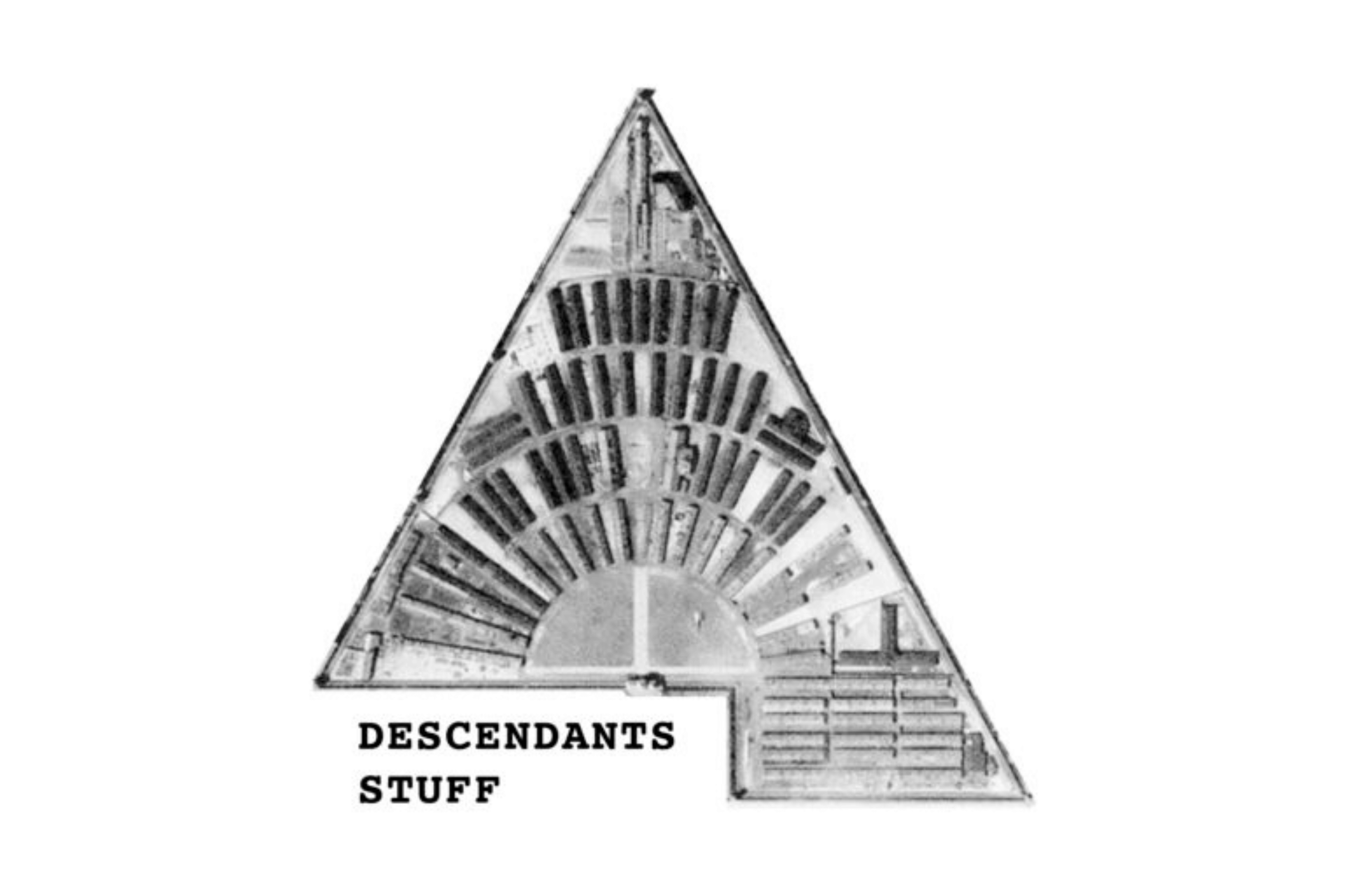
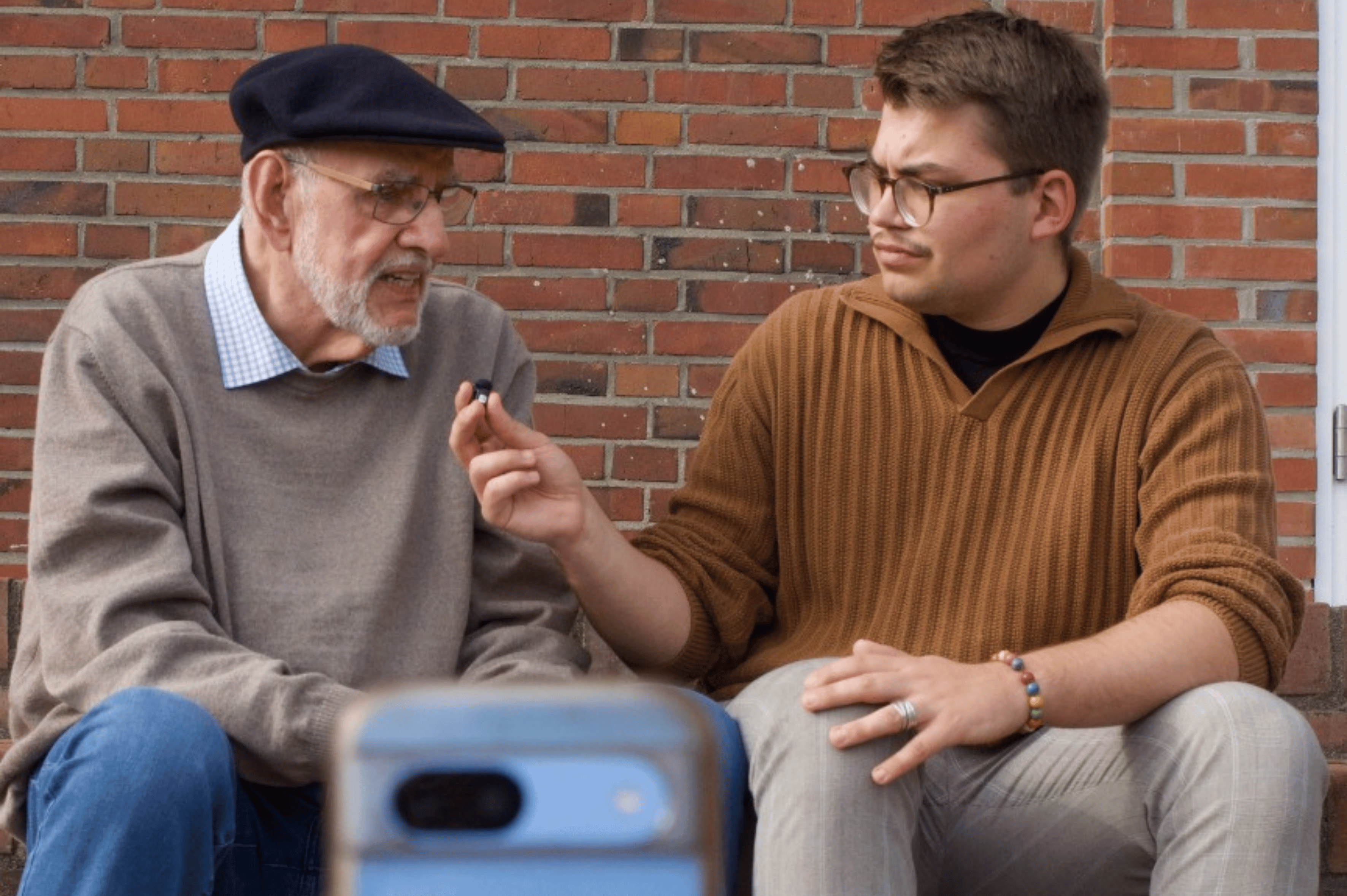
Presenting a picture of the history of Sachsenhausen concentration camp that goes beyond the official records: This is the aim of the podcast Descendants Stuff, a podcast for and with relatives of Sachsenhausen concentration camp prisoners. Each episode features an interview with a relative of someone who was imprisoned at Sachsenhausen concentration camp.
In the 37th episode, for example, Herbert Böhm’s granddaughter tells his story: Because of his family’s difficult economic circumstances, he was stigmatized as “asocial” and sent to Sachsenhausen. He was subsequently murdered at Ravensbrück concentration camp.
The podcast grew out of the Education Agenda project Welche Stimme haben wir? [What voice do we have?], which involved relatives of people persecuted by the Nazis in the remembrance and educational work done by memorial sites.
|
|
Listen to the podcast 
|
| |
|
| State Music Councils of Berlin, Brandenburg, Schleswig-Holstein, Mecklenburg-Western Pomerania and Saxony |
|
| Young people remember persecuted musicians and writers |
|
Stolpersteine (memorial stones) serve an important purpose: They bring the stories of victims of Nazi persecution into public view in towns and cities. As part of the Education Agenda project Stolpersteine der Erinnerung – Musik und Literatur gegen das Vergessen [Memorial stones of remembrance – music and literature against forgetting], students from Saxony reconstruct the life stories of musicians and writers who were persecuted during the NS era.
“Young people see how musicians and […] writers persecuted by the National Socialists are brought out of anonymity and made visible again as human beings,” says Thomas Krüger, President of the Berlin State Music Council.
Plans include discussions between the students and family members of people persecuted by the National Socialists. |
|
| More about the project |
| |
|
| Critical Film & Image Hub at Heidelberg University’s Research Centre on Antigypsyism |
|
| From school cinema to fellowships: new narratives about Sinti and Roma |
|
| The NS genocide of the Sinti and Roma is barely embedded in collective memory, and members of this minority continue to be largely excluded from films, or else they are portrayed in stereotypical ways. The Education Agenda project Neve Paramisija | Neue Erzählungen. Filmbildung zur Geschichte und Gegenwart von Sinti* und Roma* [Neve Paramisija | New narratives. Film education on the history and present of Sinti and Roma] counters this with films that place the perspectives of Sinti and Roma at the center, using several different approaches: A curated collection of films and specially produced short films provide the basis for nationwide film screenings followed by moderated discussions, both for school classes as part of the SchulKinoWochen [School Cinema Weeks] and for adults. Accompanying educational materials that take a critical approach to antigypsyism make the films suitable for classroom use. In addition, a fellowship program will train twelve young Sinti and Roma to become film educators who will subsequently moderate film discussions themselves. In November, the documentary Zirkuskind, Django – Ein Leben für die Musik and a program of short films will be screened during the School Cinema Weeks in Berlin, Hamburg, Baden-Württemberg and Rhineland-Palatinate. |
|
| More about the project |
| |
|
| |
|
| |
|
| |
| Content Creator Summit: scroll, stop. History!
How can complex topics be presented in an engaging and understandable way in just 60 seconds? On October 2 and 3, more than 20 content creators gathered at the Neuengamme Concentration Camp Memorial. “Two days full of history, storytelling and fascinating encounters,” wrote Hadyeh Khalaj in an Instagram post reflecting on the summit organized by the EVZ Foundation and the Foundation of Hamburg Memorials and Learning Centres Commemorating the Victims of Nazi Crimes. René Schaar wrote in his Instagram story: “It really gives me strength to know that we [content creators] are each speaking out loudly in our own bubbles for democracy and against all forms of exclusion. And I’m sure we’ll be creating more content together in the future.” The various workshops covered storytelling in short-video formats, algorithms, research, fact-checking and identifying historical revisionism in digital spaces.
The discussion with Barbara Brix and Bernhard Esser was particularly moving: She is the daughter of an NS perpetrator, while his father survived Neuengamme concentration camp. Their family histories could hardly be more different, yet they work together to combat right-wing extremism!
|
|
| The Reel About the Summit |
| |
|
| Ostfriesen-Zeitung |
|
| NS forced labor in East Frisia |
|
The National Socialists forced millions of people from territories occupied by Germany to work for them. Numerous businesses and private individuals benefited from this, particularly in agriculture. Engerhafe Concentration Camp Memorial and Europahaus Aurich now aim to address the inadequate engagement with this subject through an educational project.
Drawing on historical sources and biographies, particularly those of female forced laborers, young people investigate the NS history of their hometowns. The findings will be presented and made visible in the form of a “digital map of remembrance.”
The young people will also learn to recognize and challenge contemporary forms of racism, antisemitism and hostility toward particular groups of people.
|
|
|
|
Junge Welt
|
|
|
National Socialism in the Allgäu
|
|
The special exhibition Butter, Vieh, Vernichtung – Nationalsozialismus und Landwirtschaft im Allgäu [Butter, Livestock, Extermination – National Socialism and Agriculture in the Allgäu Region] examines the links between agriculture, food policy and NS ideology in the Allgäu region. Five thematic sections explore different aspects of rural life during the NS era. The exhibition shows how NS ideology and policies extended into the agricultural sector.
It offers a different perspective, shifting the focus from the major urban centers of NS policy to everyday rural life and challenging the image of an apolitical rural idyll.
|
|
|
Read the article
|
| |
|
|
Südwestrundfunk
|
|
|
Forbidden relationships during the NS era
|
|
Under National Socialism, relationships between Germans and forced laborers or prisoners of war were prohibited. Nevertheless, such relationships did exist – as do children born from them. Their stories were kept secret within families for many years and received little attention in public consciousness.
The exhibition trotzdem da! [Here nonetheless!] at the Osthofen Concentration Camp Memorial focuses on the children born from these prohibited relationships and examines how they experienced discrimination and exclusion during and after the NS era.
The exhibition will be on display from November 4, 2026 to January 17, 2027 at the Museum of Forced Labor under National Socialism in Weimar.
|
|
|
Read the article
|
| |
|
Attack on the NS Documentation Center in Cologne
During the night of October 15/16, all three entrances to the NS Documentation Center (NS-DOK) on Appellhofplatz in Cologne were doused with foul-smelling butyric acid. The previous evening, the Center had hosted a panel discussion entitled Was folgt aus der AfD-Entscheidung des Verwaltungsgerichts Köln? [What follows from the Cologne Administrative Court’s decision on the AfD?]
Due to the attack and extensive cleaning work, the memorial site remained closed for the days that followed.
Dr. Henning Borggräfe, Director of the NS Documentation Center, commented on the attack: “Without wishing to prejudge the police investigation, we must regard this incident as a targeted attack on the memorial site and the culture of remembrance of National Socialism in Cologne. We strongly condemn the attack and will not be intimidated by it.”
The City of Cologne has filed a police complaint. Given the significance of the site, the police state security division is now also investigating the case. Mayor Torsten Burmester (SPD) said: “The NS-DOK is not just any building: it is the place in Cologne where we research the crimes of National Socialism, bring them to light and remember the victims.”
|
| |
|
| |
|
|
|
| |
Vitsche e. V. about the Education Agenda project Erinnern an Zwangsarbeit: Ukraine und Polen im Nationalsozialismus [Remembering forced labor: Ukraine and Poland under National Socialism] |
| |
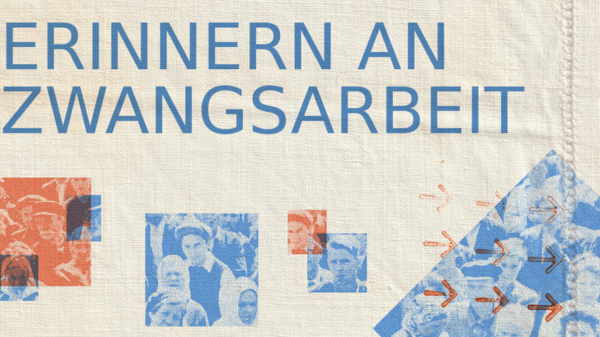
Why have the stories of Ukrainian and Polish forced laborers remained marginalized in Germany’s culture of remembrance, and how can participatory, victim-centered formats help address this? These are the questions explored by the multiperspective Education Agenda project Erinnern an Zwangsarbeit: Ukraine und Polen im Nationalsozialismus [Remembering forced labor: Ukraine and Poland under National Socialism].
In November, the project will be launching a six-day residency entitled “Guests from Abroad” in Gelsenkirchen. Actors, artists, researchers and activists from Ukraine, Poland and Germany will explore the stories of people referred to as Ostarbeiter (Eastern workers) during World War II. The residency will conclude with short public performances.
What do you expect from the “Guests from Abroad” residency in November, and what happens afterward?
The residency is the centerpiece of our project, taking place at Atelierhaus Gelsenkirchen from November 12 to 18, 2026. Six participants from the arts, acting, research and activism – two each from Ukraine, Poland and Germany – will work with archival sources and private letters over six days. Supported by facilitators and a Joker, they will use forum theater to develop short performances that will be presented publicly on November 17. Audience members will be invited to intervene in the scenes and discuss possible courses of action. The aim is not to rewrite historical experiences but to reflect together on coercion, responsibility and how we deal with this history today.
In winter 2026/27 and spring 2027, the focus will be on postproduction of the documentary and preparations for a Memory Week in Berlin in cooperation with Sophiensæle and the Ravensbrück Memorial. A weeklong program featuring participatory workshops, seminars and historical walking tours will take place in Berlin in May 2027. This will be followed in summer and fall 2027 by a research weekend at the Museum of Forced Labor in Weimar, recording of the podcast series and development of the digital platform. The platform is scheduled to launch publicly in spring/summer 2028. |
|
| Read the full interview |
| |
|
| November 4 – January 17, Weimar |
| |
Exhibition trotzdem da! [Here nonetheless!] about forbidden relationships during the NS era |
| |
The traveling exhibition trotzdem da! Kinder aus verbotenen Beziehungen zwischen Deutschen und Kriegsgefangenen oder Zwangsarbeiter:innen [Here nonetheless! Children born of forbidden relationships between Germans and POWs or forced laborers] will be in Weimar from November to January. It tells the life stories of children born from forbidden relationships during World War II and the early postwar years.
The biographies reveal both similarities in the lives of those featured and the diversity of their experience. Each biography is supplemented and contextualized by a historical topic connected to the individual’s life story.
The research and exhibition project trotzdem da! was funded under the Education Agenda NS-Injustice from 2022 to 2024. |
| |
| Find out more |
| |
| |
|
| November 6, online |
| |
Call for participation: the Nazi past at universities |
| |
The Amadeu Antonio Foundation is looking for committed individuals who are investigating their university’s Nazi past and working to combat antisemitism and historical revisionism at universities.
The project GEGEN/STAND/AUFARBEITUNG aims to raise the visibility of historical and political engagement and research at universities, connect initiatives working in isolation and initiate new approaches to critically reappraising the past.
In three workshops, participants will be able to present their work, exchange ideas and learn from one another. Their work will then be brought to the attention of audiences across Germany through various media.
An online information session will take place on November 6 to introduce the project and answer outstanding questions. |
| |
| Find out more |
| |
| |
|
| November 12, Berlin |
| |
Berlin premiere of the documentary Genya at Bundesplatz-Kino |
| |
The documentary Genya will premiere at 6 p.m. November 12. It tells the story of Yevheniia (Genya) Sydorova (1923–2021), one of the last survivors of Ravensbrück women’s concentration camp. Having accompanied Genya during the final months of her life, Ukrainian director Lesya Kharchenko explores how she dealt with violence and loss – memories of her father’s execution, her deportation and forced labor in Germany. At the heart of the film is the question: Is forgiveness possible after the unforgivable? The documentary is being funded and presented as part of the EVZ Foundation’s 25th anniversary program NO TIME TO FORGET.
Registration is required to attend the event. |
| |
| Register here |
| |
| |
|
|
Disclaimer: The EVZ Foundation has adopted the project executing agencies’ gender-inclusive language conventions.
|
| |
|
| NEWSLETTER 12/2026 |
|
| Our next issue will be published at the beginning of December! |
|
|
| |
In the next issue, we will once again report on project updates, upcoming events, and upcoming calls for applications in the EVZ Foundation's funding programs. |
|
All issues at a glance  |
| |
|
|
|
|
|
|
Stiftung Erinnerung,
Verantwortung und Zukunft
Friedrichstraße 200
10117 Berlin, Germany
T +49 (30) 25 92 97-0
F +49 (30) 25 92 97-11
Website
|
| |
|
Responsible:
Dr. Andrea Despot and Jakob Meyer
Editorial:
Sophie Ziegler, Katrin Kowark, Sarah Keller, Tessa Demleitner
Image Credits:
Descendants Stuff Podcast; Vitsche e. V.
|
| |
|
|
|
|
|
Follow us
|
| |
|
|
|
|
|
|
|
The editorial team welcomes your opinion on the newsletter and will be happy to answer any questions. We also help with any issues you might encounter: newsletter@stiftung-evz.de
You are receiving this e-mail because you have subscribed to the newsletter of the EVZ Foundation. You can unsubscribe from this information service at any time. To unsubscribe, click here
|
|
|
If you are unable to click the link, please forward this newsletter to newsletter@stiftung-evz.de with the subject line "Unsubscribe".
|
|
|
|
|
|
| © Stiftung Erinnerung, Verantwortung und Zukunft, 2026 |
|
|
|
|
|
|