| |
|
ISSUE 02/2025
|
| |
|
|
| |
Dear Readers,
For almost three years now, our partners in Ukraine have been suffering as a result of the attacks on their country by Russia. For many, day-to-day life in war means enduring permanent life-threatening danger, fear of death, displacement and poverty. Ukrainians in Crimea and in the east of the country have been exposed to the horrors of war and Russian occupation for much longer.
How can cultural life continue in a civil society that is literally under fire? How can solidarity with those in need be effective when everyone is trying to survive in a state of emergency? Our long-standing local partners tirelessly demonstrate how democratic commitment and solidarity can be put into practice in the most adverse conditions. As we receive regular reports from projects on the ground, our team is both shocked and uplifted at the same time. These reports are currently all the more powerful as a driving force behind the diverse ways in which we embrace solidarity with Ukraine.
We present one of these striking project reports in this newsletter. It tells of how Nazi survivor Oleksandra Ivanivna Lyashenko was able to find a place of refuge in a library in Malyn, Ukraine – thanks in part to the funding program YeMistechko. Find out about this and other projects being pursued in and for Ukraine – such as our new podcast series Trümmer & Träume, at Cafe Kyiv 2025 on March 11 at the Colosseum Berlin.
You can also join us as we look back on Remembrance Day for the Victims of National Socialism and the future of remembrance.
Let’s continue to stand together – stay informed and get involved with us.
Dr. Andrea Despot
CEO of the EVZ Foundation
|
| |
|
|
SOLIDARITY WITH UKRAINE
|
|
|
YeMistechko – a place for everyone
|
|
|
|
| |
|
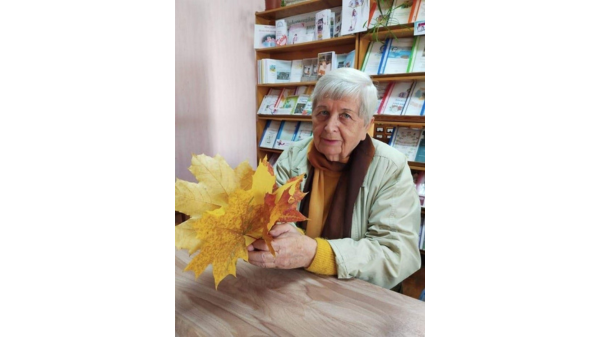
Born in 1940, Oleksandra Ivanivna Liashenko was driven from her home by the war. In 2022, Russian troops destroyed her hometown of Siversk– just a few kilometers north of Bakhmut. She said she had experienced the terror of the German occupation as a child and could not imagine that she would experience war again in her old age. Today, Oleksandra Ivanivna Liashenko lives with other internally displaced persons at a kindergarten in Malyn, where the former librarian also eagerly attends the discussion club at the municipal library. Here, participants share moments of comfort with each other – whether over a cup of tea or going out for walks. Numerous Ukrainian libraries and other cultural institutions are once again becoming places of social interaction and community as a result of the EVZ Foundation’s funding program YeMistechko. Places dedicated to democratic commitment and solidarity are being created in the midst of war – places of refuge for people like Oleksandra Ivanivna Liashenko. Find out about this project and others like it in Ukraine ...
|
|
... at Cafe Kyiv 2025 
|
| |
|
|
SOLIDARITY WITH UKRAINE
|
|
|
Save the date: podcast release Trümmer & Träume
|
|
|
|
| |
|
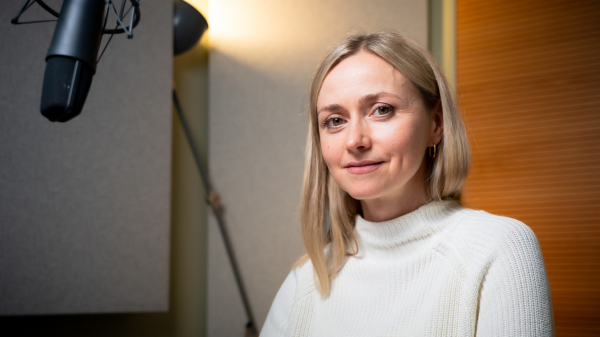
What holds a society together as the bombs drop? In times of multiple crises, the plight of Ukrainian society often gets overlooked. In our podcast series Trümmer & Träume we focus on the situation of the people on the ground – and their tireless commitment to solidarity and democratic engagement. In four episodes, host Ira Peter talks to survivors of National Socialism, museum directors who protect artworks from missiles, young people who build bridges between Germany and Ukraine, and activists from the Roma community whose voices often go unheard.
|
|
|
Listen in, subscribe to the podcast and explore the content from February 19
|
| |
|
|
CULTURE(S) OF REMEMBRANCE
|
|
Memories from a Ukrainian-Jewish century
|
|
|
Since 2000, our partner organization Centropa has interviewed more than 1,200 survivors of National Socialism and digitized more than 25,000 family photographs and personal documents. The goal: to preserve the accounts of Jewish witnesses and survivors of National Socialism from Central and Eastern Europe for posterity so as to keep their memories alive for future generations. Sponsored by the EVZ Foundation, the exhibition A Ukrainian Jewish Century presents life stories from the 1920s to the present day – from the perspective of those who have witnessed Ukrainian Jewish life in the past and present.
|
|
|
Explore the exhibition and the archive now
|
| |
|
NS FORCED LABOR
|
|
Interview archive "Forced Labor 1939-1945" firmly established
|
|
|
The so-called Eastern Workers’ Decrees of February 20, 1942 subjected millions of deported Soviet forced laborers to exceptional legislation that was racially biased. Hanna Hryshchenko was deported from the Ukraine to Chemnitz as an 18-year-old to be put into forced labor. How did she fare as an “Eastern worker”? Her memories are recorded in the interview archive Forced Labor 1939-1945 – as are hundreds of other accounts by survivors of National Socialism. Created collaboratively by the EVZ Foundation, the Free University of Berlin and the German Historical Museum, the archive has been integrated in the platform Oral-History.Digital, offering thousands of users access to interviews and educational applications.
|
|
|
Explore the project now
|
| |
|
|
| |
|
CULTURE(S) OF REMEMBRANCE
|
|
|
Shaping and networking digital memory
|
|
|
How can digital remembrance initiatives from Central and Eastern Europe come together across national borders to engage in discussion on the challenges, strategies and principles involved in developing digital remembrance culture? Together with the think-tank iRights.Lab, the EVZ Foundation created Digital Collective Memory in 2021, an online platform that enables experts to network and share ideas. The platform is now also collaborating with Landecker Digital Memory Lab run by the Alfred Landecker Foundation and the University of Sussex. The aim here is to help strengthen and expand the participatory social network for digital remembrance culture!
|
|
Sign up now and help shape digital memory 
|
| |
|
|
CALL FOR APPLICATIONS
|
|
Latcho Dives 2.0: support for Roma survivors and their descendants
|
|
|
Survivors of the genocide against the Roma/Romnja are particularly hard hit by the consequences of Russia’s war against Ukraine. In their day-to-day lives, the very elderly suffer poverty, as well as being subjected to displacement and re-traumatization. In addition to providing vital humanitarian support, the EVZ Foundation’s funding program Latcho Dives 2.0 (Latcho Dives is Romani for “good day”) gives those affected access to medical, legal and social assistance. The aim is to promote the engagement of self-organizations in Ukraine and Moldova that seek to improve the social participation of Roma/Romnja, raise the visibility of their history and culture, and further develop their own collective.
|
|
Find out more and apply by March 3 
|
| |
|
CALL FOR APPLICATIONS
|
|
MemoRails – stop! Memories of Nazi history are kept alive here
|
|
|
Together with the Federal Government Commissioner for Culture and the Media (BKM), the EVZ Foundation is launching the funding program MemoRails. The program aims to support civil society initiatives in Germany that adopt a creative and contemporary approach to keeping the memory of Nazi crimes alive at German railway stations. How is it possible to raise the visibility of railway stations as everyday places of Nazi persecution, and how can the stories of both victims and perpetrators be researched and told?
|
|
|
Find out more and apply by March 31
|
| |
|
|
| |
January 27: the future of remembrance
80 years after the liberation of Auschwitz concentration camp, only a few survivors remain who are still able to talk about what they experienced. The implications of this are serious: without the generation of eyewitnesses, and as the passage of time consigns events to an ever more distant past, knowledge of Nazi history and the Holocaust is lost. At the same time, ongoing discrimination against minorities continues to have an impact to this day. What is more, we are seeing an alarming increase in antisemitism, antigypsyism and racism as well as attempts to establish historical revisionist views as part of mainstream discourse!
Through its projects, the EVZ Foundation creates low-threshold, accessible spaces of remembrance that enable encounter, dialog and reflection. Whether films, social media, apps or dialog spaces: a wide range of events and initiatives were organized to mark January 27 – the Day of Remembrance for the Victims of National Socialism, gathering people together to commemorate and engage with the subject. Commemorative kick-off for the year of remembrance 2025!
|
| |
|
| |
|
|
| |
|
|
| |
One in ten interviewees aged between 18 and 29 in Germany said they had never heard of the Holocaust. A recent survey conducted by the Jewish Claims Conference shows enormous gaps in people’s knowledge – as was previously revealed by the EVZ Foundation’s MEMO youth study in 2023. Even though younger generations want to be taught about the Nazi era and how it relates to the present, half of the 16 to 25-year-olds surveyed were unable to correctly state the period of Nazi rule.
What can be done? This is a question that constantly concerns us and our partners. Now more than ever, remembering Nazi injustice seems to be crucial.
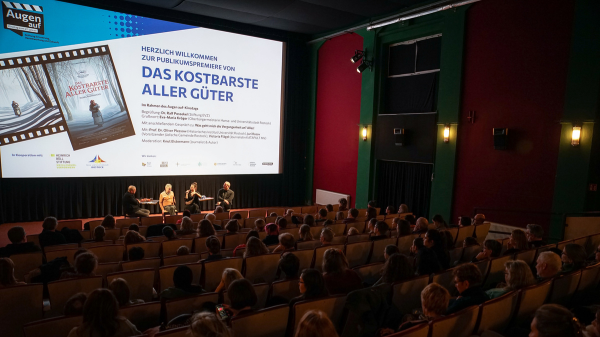
One of many answers was provided by the committed individuals in Rostock who can be seen in this photograph: on January 27, the Day of Remembrance for the Victims of National Socialism, the auditorium of the Wundervoll cinema in Rostock was transformed into a space of remembrance – as was the case at cinemas in Berlin and Frankfurt am Main, too. Hundreds of visitors gathered at the EVZ Foundation’s first Augen auf [Eyes open] Cinema Day to watch current films about the Holocaust and the Nazi era, after which there were heated debates about the future of Holocaust education. A school cinema program and teacher training courses were organized to reach young people in particular – after all, they are the future bearers of our culture of remembrance.
Did you miss Cinema Day on January 27? From 2026 onwards we plan to expand the project into a nationwide film week. The Cinema Day website provides educational materials relating to films shown by our partner VISION KINO – Netzwerk für Film und Medienkompetenz, along with a selection of films recommended for school screenings.
|
|
Find out more

|
| |
|
| |
|
|
| |
|
What stories are we telling – what perspectives on history are we sharing? How do we react to war propaganda, hatred of minorities and historical myths?
|
| |
In free societies, civil society actors are involved in finding answers to these questions. In order to do this, they need freedom to act.
Yet across Europe, governments and non-state actors are taking targeted measures to restrict civil society engagement. These restrictions range from bureaucratic harassment to physical violence against activists.
Over the next few months, we will be interviewing local partners and people affected by repression and taking a closer look together: Where are civil societies under pressure? And how we can take joint action to empower them?
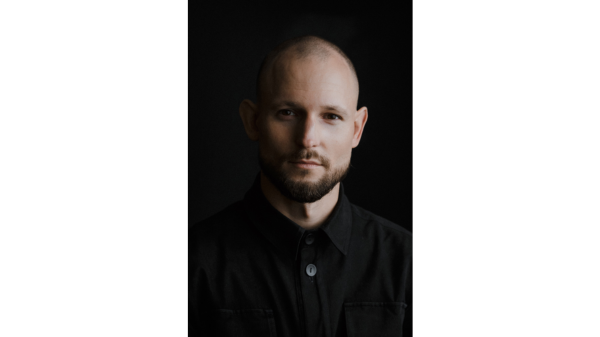
We start with Aleh Razhkou, Chairman of the Belarusian NGO “Journalists for Tolerance” (J4T) and Andrej Stryshak, Director of the Belarus Solidarity Foundation BYSOL.
|
| |
|
| |
|
|
|
|
|
| |
|
Aleh Razhkou, head of the Belarusian NGO 'Journalists for Tolerance' (J4T)
|
| |
Dear Mr Razhkou, in spring 2024, Belarus passed a new repressive law against LGBTIQ people. It defines same-sex relationships and transgender people as ‘pornography.’ Prison sentences are threatened. What are the specific challenges faced by the Belarusian LGBTIQ community?
The situation is dire. After 2020, the LGBTIQ community became a target for law enforcement. Since queer activists participated in protests under rainbow flags, authorities have exploited homophobic sentiments in Belarus to discredit the broader 2020 protest movement. This is being done through aggressive propaganda and hate speech against queer people in the media, as well as “humiliating videos” where individuals are forced to disclose their orientation or gender identity, often accompanied by the public release of intimate photos or private messages. Many from the community have been imprisoned for protesting or are under house arrest. Charges like hooliganism or participation in mass riots are commonly used to target queer individuals.
|
|
|
Read more & explore the context
|
| |
|
|
Observers are concerned about a potential rise in unfiltered hate against minorities in the digital space due to the absence of restrictions on hate speech, the discontinuation of fact-checking programs, and insufficient moderation of disinformation. The Anne Frank Educational Center’s report on the TikTok universe of the (far) right shows just how dangerous the powerful presence of right-wing extremists on social media has been for many years. What can be done in the area of historical and political education?
|
| |
|
|
Rnd.de
|
| |
|
“There is no real culture of remembrance in this country”
|
| |
|
In this article, Redaktionsnetzwerk Deutschland raises the question of whether young people can be inspired to value democracy by being shown films about the Nazi era. Publicist Michel Friedman and Sonja Begalke, a specialist advisor at the EVZ Foundation, discuss the state of the culture of remembrance and the role of films in communicating Nazi crimes.
|
| |
Read now

|
| |
| |
|
|
DEUTSCHLANDFUNK
|
| |
|
Why didn’t Pius XII protest against the Holocaust?
|
| |
|
In an interview with Deutschlandfunk radio, historian Hubert Wolf provides insights into secrets held in the Vatican archives. In connection with the EVZ Foundation's project Asking the Pope for Help, Wolf is researching letters of petition from Jews to Pope Pius XII – and the Holy See’s reaction to the Holocaust.
|
| |
|
Listen now
|
| |
| |
|
|
taz.de
|
| |
|
“Every gap in knowledge is a gateway for disinformation”
|
| |
|
The taz panel debate Östlich der Erinnerung [“East of memory”] featured Jens Schley, Head Office Coordinator for EVZ Foundation’s Education Agenda NS-Injustice, Tanja Penter, Professor of Eastern European History at the University of Heidelberg, and Jörg Morré, Director of the Karlshorst Museum: the panelists discussed the gaps in the collective memory of German people and how this impacts dramatically on present-day society.
|
| |
|
Watch now & follow the discussion
|
| |
| |
|
|
FEBRUARY 12, LEIPZIG
|
| |
|
Opening event: What remains?
|
| |
|
Visit a digital learning space in Leipzig now – presented as a mobile installation! Curious to find out more? The Moves gUG project Was bleibt? [What remains?] being run under the Education Agenda NS-Injustice explores both continuities and ruptures in German family histories, thereby creating a new form of remembrance that does not end with the Second World War.
|
| |
|
Find out more and plan your visit
|
| |
| |
|
|
FEBRUARY 23, BERLIN
|
| |
|
Off to Lake Wannsee – and off to the polls!
|
| |
|
To mark the third anniversary of Russia's attack on Ukraine on 24 February 2022 and the Bundestag elections – the EVZ Foundation-funded Aid Network for Survivors of Nazi Persecution in Ukraine is collaborating with the House of the Wannsee Conference Memorial and Educational Site to host a discussion with Ukrainian contemporary witness Svetlana Petrovskaya. At the age of 87, Svetlana Petrovskaya fled to Berlin when the Russian war of aggression against Ukraine began three years ago – and made a powerful appeal to all mothers of Russian soldiers.
|
| |
|
Find out more – and don’t forget to cast your vote!
|
| |
| |
|
|
MARCH 4, DIGITAL
|
| |
|
Should I stay or should I go? Dealing with problematic platforms
|
| |
|
Following Elon Musk's takeover of X and his recent interference in the German election campaign, foundations, politicians and scientific organisations have shut down their channels there. Will the same happen to other platforms now that they have stopped fact-checking? We wanted to talk to social media managers from our network of communicators about their plans and questions. Sarah Keller, Social Media Manager at the EVZ Foundation, reveals how we approached the issue.
|
| |
|
Please send your contributions by 20 February to: kommunikation@stiftung-evz.de
|
| |
| |
|
| NEWSLETTER 03/2025 |
|
| Our next issue comes out at the beginning of March! |
|
|
| |
| March is Romnja* Power Month, and we present projects by self-organizations from the community that are looking to tell the story of the Sinti and Roma from a fresh perspective and on their own terms. We also show how a theme week at the German National Theater Weimar will be commemorating the liberation of Buchenwald concentration camp. |
|
| All issues at a glance
|
| |
|
|
|
|
|
|
Stiftung Erinnerung,
Verantwortung und Zukunft
Friedrichstraße 200
10117 Berlin, Germany
T +49 (30) 25 92 97-0
F +49 (30) 25 92 97-11
www.stiftung-evz.de
|
| |
|
Responsible:
Dr. Andrea Despot
Editorial:
Sophie Ziegler, Jana Bültge, Sonja Folsche, Sarah Keller, Thomas Stein
Image Credits:
Malynska Zentrale Bezirksbibliothek Wasilja Skuratiwskogo; Martin Keil / speak low; Stefanie Loos; Lauri Hasleder; Aleh Razhkou. |
| |
|
|
|
|
|
Follow us
|
| |
|
|
|
|
|
|
|
The editorial team welcomes your opinion on the newsletter and will be happy to answer any questions. We also help with any issues you might encounter: newsletter@stiftung-evz.de
You are receiving this e-mail because you have subscribed to the newsletter of the EVZ Foundation. You can unsubscribe from this information service at any time. To unsubscribe, click here
|
|
|
If you are unable to click the link, please forward this newsletter to newsletter@stiftung-evz.de with the subject line "Unsubscribe".
|
|
|
|
|
|