|
Moving stories: LGBTIQ Ukrainian refugees speak out
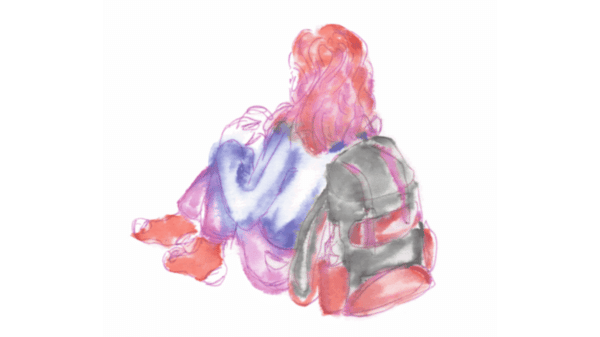
Millions of people have been forced to flee Ukraine since the start of Russia’s war of aggression. Many of these experiences remain untold, including those of queer Ukrainians. In the interview series Moving Stories by Oleksandra Kantser and Andrii Shestaliuk, six individuals share how they not only fled bombs and destruction but also faced systemic exclusion, anti-queer violence and societal silence – both before and during the war. According to a study by ILGA-Europe (International Lesbian, Gay, Bisexual, Trans and Intersex Association), Ukraine ranks 40th out of 49 European countries in terms of LGBTIQ rights.
“[…] and I couldn’t even imagine that I would one day be able to speak openly,” says Serhiy. The interviews offer powerful insights into queer life in Ukraine before and after February 24, 2022. For some, fleeing to Germany, Poland, Finland, or Canada offered the first opportunity to live more openly and safely as queer individuals. But even in exile, insecurity and isolation remain a reality, as do new forms of marginalization.
The report is part of the journalism series of the Education Agenda project History Unit: Reframing Queer Narratives in Media, which is run by Netzwerk n-ost. The project aims to highlight queer perspectives in historical education and contemporary journalism by means of international workshops, collaborative reporting, and public debate.
Other History Unit features focus on topics such as remembering queer victims of the Nazi regime, trans and non-binary identities in Poland, Belarus, Ukraine, and Germany, queer culture in Eastern Europe, and the political exploitation of queer identity. All contributions share the same to goal: to tell queer stories – and stand firmly against the normalization of anti-queer rhetoric.
|
| |
|
die kunstbaustelle e. v. |
|
Making Nazi crimes visible: learning on-site with the NaziCrimesAtlas |
|
|
| |
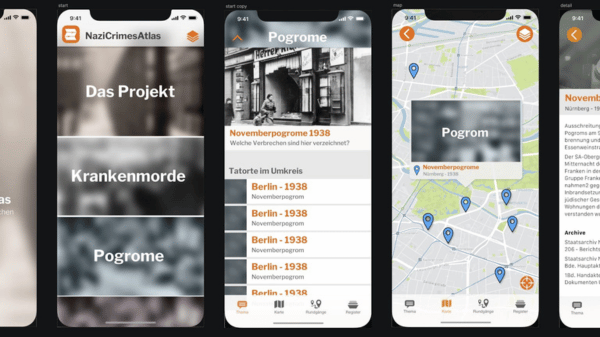
Where exactly did Nazi crimes occur? And which places have lost their visibility as sites of remembrance? The new NaziCrimesAtlas offers answers to these questions by making historic injustice visible at the local level. Developed by dieKunstBauStelle e. V. and berlinHistory e. V., the app enables locality-based engagement with Nazi-era crimes. Drawing on historical court records, it maps over 25,000 documented cases at more than 8,000 sites across Germany via an interactive interface. The app is designed for used by schools, remembrance initiatives, and interested individuals. Users can actively contribute to its development by commenting, adding information, and conducting their own research on site. |
|
Find out more and download the app  |
| |
|
| theater der jungen welt |
|
Listen to resistance: exploring the stories of oppositional youth |
|
|
| |
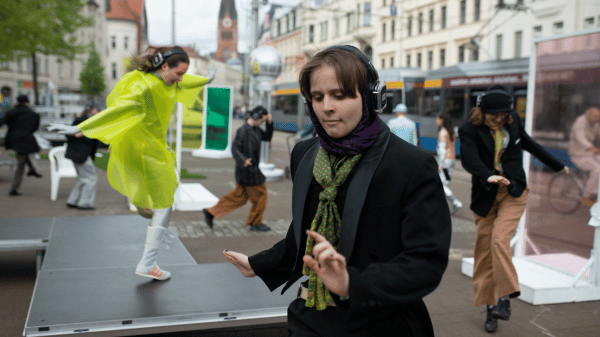
What did it feel like to say “no” to the Nazi state as a young person? The mobile web app Sounds of Resistance invites users to explore the stories of the Leipzig Meuten and Duisburg Edelweißpiraten – right where these youth groups themselves once lived, engaged in reflection and took action. By means of an interactive map and audio tracks, users can immerse themselves in the lives of these courageous young people. A fictional chat feature brings their perspectives to life, providing an emotional gateway to the history of youth resistance. The digital archive invites further engagement – through personal research and user contributions. |
|
| Listen in here |
| |
|
| BRANDENBURG MUSEUM aND FILM UNIVERSITy BABELSBERG KONRAD WOLF |
|
Memory Media Lab – using film and immersive media in commemorative work |
|
|
| |
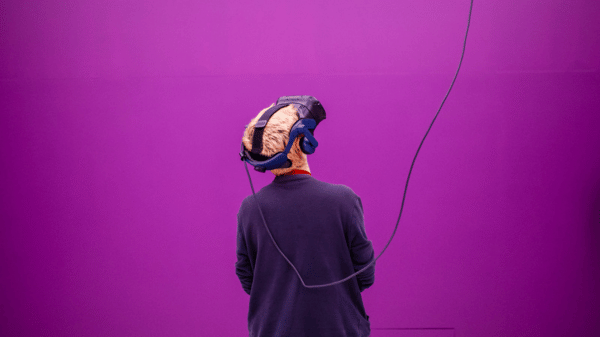
| Are you engaged in commemorative work and looking to strengthen your media skills? The Memory Media Lab is a continuing education program running from September 2025 to July 2026 at Film University Babelsberg KONRAD WOLF. It is designed for all those involved in social commemorative work who would like to strengthen their media skills by learning how to use film, VR and immersive media formats. The program begins with a four-day Summer School to be held as part of the Education Agenda project For Real? Virtual encounters with Nazi-era eyewitnesses?. It explores new digital approaches to working with historical eyewitness testimony in the context of Nazi history education. The Summer School offers hands-on workshops and dialog sessions with experts while also offering people the opportunity to start developing their own media-based projects. Online information sessions will be held on July 9 and 15. |
|
| Find out more and apply by July 20 |
| |
|
RIAS Annual Report 2024 – antisemitic incidents in Germany reach record high
The latest annual report issued by the Federal Association RIAS reveals a disturbing trend: 8,627 antisemitic incidents were documented in 2024 – nearly triple the figure for 2022. That is almost 24 incidents per day, a 77% increase over 2023.
Since the Hamas terror attack on Israel and the outbreak of war in Gaza, antisemitic violence, threats, and hate speech have remained a daily reality for Jews in Germany. Especially alarming is the rise in physical assaults: RIAS now records an average of one antisemitic attack every two days. There has also been a sharp increase in antisemitic threats and attacks specifically targeting women.
The most widespread form remains Israel-related antisemitism, where classic antisemitic tropes are repackaged and projected onto current events. This form is most visible in public spaces: over 1,800 antisemitic demonstrations were recorded in 2024 – more than twice as many as in the previous year.
Escalations in the Middle East are consistently mirrored by surges in antisemitic incidents across Germany.The current conflict is having effects far beyond the region itself: Jewish individuals in Germany are experiencing the consequences in classrooms, lecture halls, and everyday life.
|
| |
|
| |
|
| |
|
| |
| Gedenkanstoß in Bremen and Chemnitz – rethinking how we remember
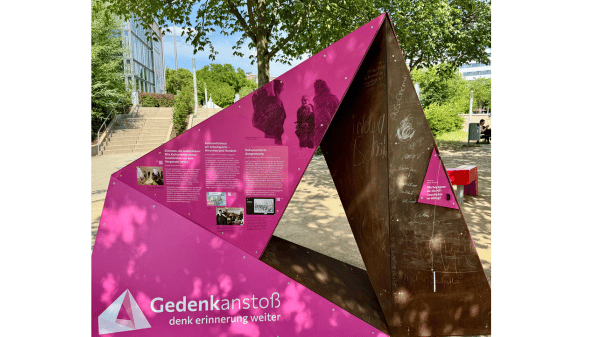
The new Gedenkanstoß MEMO study shows that for the first time since the series began, more people in Germany are in favor of drawing a line under the Nazi past than against doing so. Yet in the case of many Nazi crimes – particularly those committed against Roma/Romnja, Sinti/Sintize, Black people, queer individuals, and people with disabilities – it is still the case that, to this day, people generally know very little about them.
What impact do these gaps in our memory of the Nazi era have on how we perceive discrimination today? Whose stories are missing from Germany’s culture of remembrance?
In June, the nationwide Gedenkanstoß tour made stops in Bremen and Chemnitz. Two evenings, two cities, one shared goal: to rethink remembrance culture through dialog. In Bremen, the focus was on remembrance in a migration society, while in Chemnitz attention turned to the blind spots in our collective memory of the Nazi period. The two events featured discussions, performances, and fresh perspectives – including contributions from Derviş Hızarcı (KIgA), Virginie Kamche (Afrika Netzwerk), Clara Wahl (History in Black), Harika Dauth (Romano Sumnal), and Dr. Andrea Despot (EVZ Foundation). |
|
| Find out more about the project and the tour |
| |
|
| siegessäule.de |
|
Challenging gender norms: trans* people have always existed |
|
| This article was published as part of the journalism series created through the Education Agenda NS-Injustice funded project History Unit: Reframing Queer Narratives in Media. It explores lesser-known historical perspectives on trans and non-binary lives: from Magnus Hirschfeld’s pioneering Institute for Sexual Science to the systematic persecution of trans people under the Nazi regime, and the ongoing struggles experienced by these individuals today. The article highlights the story of Käte Rogalli, who lived as a woman during the Weimar Republic, was persecuted during the Nazi era for her gender identity, and was ultimately murdered at Sachsenhausen concentration camp. It also highlights research on queer biographies undertaken by Polish historian Joanna Ostrowska, including the story of Witold Smentek – the first documented trans man in Poland, whose transition was officially recognized as early as 1937. |
|
| Read the article |
| |
|
| neue podcast-Folge der stiftung evz |
|
Ruins & Dreams: remembrance, fighting, helping to shape change – Roma in Ukraine |
|
Sinti and Roma make up the largest ethnic minority in Europe – and yet they remain largely invisible. This is true in the context of the war in Ukraine, too. In this podcast episode, Ukrainian Roma talk about layered discrimination, poverty, and structural exclusion – and about how they still continue to engage actively in remembrance work, in humanitarian aid, on the front lines, and in efforts to rebuild civil society.
Featured voices include: Laslo Djuri, survivor of the Nazi genocide against the Roma/Romnja and initiator of humanitarian projects, the ethnologist Janush Panchenko, the women’s rights activist Anzhelika Bielova, and Artur Ivanenko of the organization Kherson City Society of Young Roma. They are all fighting for visibility, recognition, and equal rights. This episode explores discrimination in Ukraine and Germany, remembrance in wartime and resilience, and it examines one essential question in particular: how can participation be achieved despite exclusion?
Mark your calendar now: a live podcast episode will air at the end of October! |
|
| Listen to the episode |
| |
|
| Spiegel+ |
|
| Forced labor in Friedrichshafen: the Lake Constance connection |
|
| According to the latest Gedenkanstoß MEMO study, only one in five respondents is aware that the prosperity of many German families is tied to the Nazi era. Yet it is true that in the immediate postwar years, families and small businesses in western Germany were often able to build on capital accumulated during the war. A recent SPIEGEL article traces how the city of Friedrichshafen became affluent in part due to profits made under the Nazi regime. This is a striking example of a city in which SS economics expert Max Grünbeck managed a foundation structure after the war into which Nazi-era profits were initially funneled. The story of Friedrichshafen serves as a powerful symbol of postwar West Germany as a whole. |
|
| Read the article now |
| |
|
| |
|
|
|
| |
|
| |
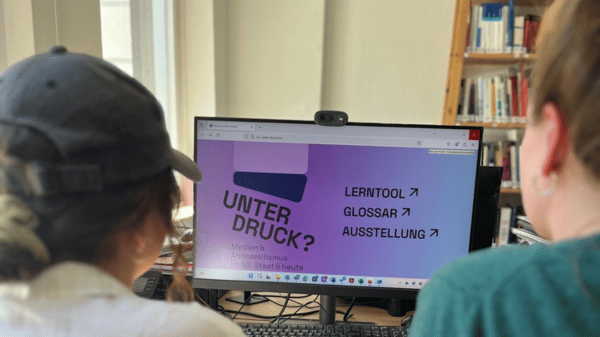
The project brings together media professionals to explore the continuity of antisemitic ideologies, looking at how they spread through media, and how antidemocratic and structurally antisemitic attacks are made on the press – both now and in the past.
How do you empower media professionals to address contemporary antisemitism, and what feedback have you received from participants?
Antisemitism is a delusional ideology that has nothing to do with the actual reality of Jewish life – yet it remains a daily threat to Jewish people around the world. History shows that this ideology repeatedly leads to violence and pogroms; the Shoah was its most horrific consequence. That’s why our project goes beyond just providing factual information. We aim to help participants understand the psychological function of antisemitism.
From this understanding, we emphasize self-reflection: journalists are to be able to recognize where antisemitic narratives might appear in their work and understand how certain media practices – such as clickbait, emotional framing, or oversimplification – can contribute to the spread of stereotypes.
Our formats are highly practice-oriented: We use real-life media examples and feature interviews with Jewish journalists and publicists like Philipp Peyman Engel and Laura Cazés. They share personal experiences from their work in media and offer concrete dos and don’ts. |
|
| Read the full interview |
| |
|
| JULY 10 AND AUGUST 14, ONLINE |
| |
Thursday Topic – Artificial Intelligence in Commemorative Work |
| |
| AI is transforming the way we engage with history and remembrance culture, too. Hosted by the EVZ Foundation and the Foundation of Hamburg Memorials and Learning Centers Commemorating the Victims of Nazi Crimes, the online input series Thursday Topic – Artificial Intelligence in commemorative work explores the following questions: What is generative AI, and where is it being used? Can AI “hallucinate”? And how should it be applied in education and research? The first session features Anna Neovesky on “AI in commemorative work: assessing, reflecting on, and using tools”: it will take place on July 10 from 11:00 a.m. to 12 noon. The second session, “Let’s explore! What Is AI?” with Tabea Glindemann, will follow on 14 August. |
| |
| Sign up now |
| |
| |
|
| JULY 14, PRAGUE |
| |
Revisited: Czech-German memory and beyond |
| |
As a partner of this year’s Memory Studies Conference the EVZ Foundation will be hosting a discussion at 2:00 p.m. on July 14 as part of its EVZ Conversations! event series featuring a panel discussion on the Czech-German culture of remembrance, enriched with the international perspectives of experts from academia and the cultural sphere. The event is being held in cooperation with the Memory Studies Association and with the involvement of the Czech-German Fund for the Future. Conference participants and external guests are warmly invited to attend. |
| |
| Find out more |
| |
| |
|
| September 18 and 19, Berlin |
| |
Networking and input meeting of the Education Agenda NS-Injustice in Berlin |
| |
| Once again this year, the EVZ Foundation is inviting those project executing agencies currently receiving grants under the Education Agenda NS-Injustice to a meeting in Berlin. Participants will gain insights into other projects, explore and experiment with the outcomes of their own projects in a practical setting, and network across disciplines. Given that this year is marked by significant remembrance milestones, this networking and input meeting offers a valuable opportunity to exchange ideas on current developments in educational and commemorative work and to share expertise. |
| |
| Find out more and sign up |
| |
| |
|
| until september 14, cologne |
| |
Exhibition: “They're still here!” |
| |
| During the Nazi era, friendships and intimate relationships between Germans and prisoners of war or forced laborers were forbidden. And yet the children born out of these so-called forbidden relationships are “still here”. The touring exhibition “They’re still here!” is the result of a project by Sandbostel Memorial Site which identified more than 20 individuals born from such relationships. The exhibition can be visited at the NS Documentation Center in Cologne until 14 September. In addition, it will soon be on display in Hamburg, Berlin, and Hasbergen. |
| |
| Find out more on the project website |
| |
| |
|
| issue 08/2025 |
|
| Our next issue comes out at the beginning of August! |
|
|
| |
| The next issue will include a new interview in our Shrinking Spaces series, and further updates from the world of EVZ podcasts. Stay tuned! |
|
All issues at a glance  |
| |
|
|
|
|
|
|
Stiftung Erinnerung,
Verantwortung und Zukunft
Friedrichstraße 200
10117 Berlin, Germany
T +49 (30) 25 92 97-0
F +49 (30) 25 92 97-11
Website
|
| |
|
Responsible:
Dr. Andrea Despot
Editorial:
Jana Bültge, Sonja Folsche, Sarah Keller, Katrin Kowark, Sophie Ziegler
Image Credits:
Finn Hofmann, NaziCrimesAtlas, Marie Laforge, Dennis Reimann, Sophie Ziegler, Kölnische Gesellschaft für christlich-jüdische Zusammenarbeit e. V.
|
| |
|
|
|
|
|
Follow us
|
| |
|
|
|
|
|
|
|
The editorial team welcomes your opinion on the newsletter and will be happy to answer any questions. We also help with any issues you might encounter: newsletter@stiftung-evz.de
You are receiving this e-mail because you have subscribed to the newsletter of the EVZ Foundation. You can unsubscribe from this information service at any time. To unsubscribe, click here
|
|
|
If you are unable to click the link, please forward this newsletter to newsletter@stiftung-evz.de with the subject line "Unsubscribe".
|
|
|
|
|
|
| © Stiftung Erinnerung, Verantwortung und Zukunft, 2025 |
|
|
|
|
|
|