|
FIVE YEARS YOUNG PEOPLE REMEMBER INTERNATIONAL
“Our funding program YOUNG PEOPLE remember international represents a transnational, European idea – to create not just communities of remembrance but also a community of shared values. A community that is strong and resilient in the face of disinformation and authoritarianism. A community that has truly learned from the past.”
Andrea Despot, CEO, EVZ Foundation
The EVZ Foundation celebrated the fifth anniversary of YOUNG PEOPLE remember international on 25 – 26 September 2025 in Berlin with around 80 participants from 16 countries. Funded by the Federal Foreign Office and implemented by the EVZ Foundation, the program enables young people from across Europe to engage critically and actively with the history of National Socialism – and to do so across borders.
One special moment in the opening was the address by Ambassador Christian Heldt, Special Representative for Relations with Jewish Organizations, Issues of Antisemitism, International Sinti and Roma Affairs, and Holocaust Remembrance at the Federal Foreign Office. His remarks highlighted the importance of the younger generation, their empathy and their commitment as a foundation for a democratic and united Europe.
Held under the motto #5YPRI – Connecting Communities of Remembrance, the two-day event focused on European perspectives on remembrance culture, learning at sites of Nazi persecution, and exploring how remembrance today can also be shaped and shared across borders in digital spaces. In presentations, panel discussions and excursions to memorial sites in Berlin and Brandenburg, project executing agencies presented the innovative formats, digital products and educational resources that have emerged in recent years, showing how they encourage young people to stand up for democracy and human rights.
One particular highlight was the honoring of contestants in the photo competition Traces of Memory: finalists presented their works – striking in their depth and diversity of perspective – and talked about their research and the motivation behind their submissions.
The event once again demonstrated clearly that remembrance lives through dialogue – and dialogue needs space, openness and support.
|
| |
|
|
INFORMED, COURAGEOUS, COMMITTED!
|
|
|
Workshops for businesses: the A in diversity – antisemitism as a blind spot in diversity management
|
|
|
|
| |
|
Conspiracy theories in the cafeteria, Holocaust denial in a social media feed, odd remarks about Judaism at a team meeting – was that antisemitic? A workshop on November 7 in Berlin will explore the phenomenon of antisemitism at the workplace and present options for action in everyday work settings.
In addition, the event Vergangenheit verstehen, Verantwortung übernehmen [Understanding the past, taking responsibility] on November 12, 2025 in Weimar gives companies the opportunity to engage with their own history in the context of Nazi forced labor, find out about best practices, and discuss ways of actively assuming responsibility.
Starting at the end of October, new company-specific educational resources will also be available – digital lunch talks, innovative digital learning modules for integration into internal learning management systems (LMS), and a guide to addressing antisemitism. The free blended learning modules remain available as well, combining on-site training with digital self-study phases.
|
|
Find out more about the project and sign up for the workshops in Berlin and Weimar 
|
| |
|
|
Finances und transparency
|
|
|
Behind the numbers: how the EVZ Foundation manages its assets
|
|
A solid financial basis is essential if we are to fulfill our mission effectively, namely effectively taking on responsibility for the present and future based on what happened in the past. How we invest, manage and further develop our endowment is presented transparently in the 2024 Activity Report and on our website, which also provides extensive facts on finance as well as a glossary of key financial terms.
On fundamental questions of investment, the Foundation’s Board of Directors is advised by the Asset Management Advisory Committee. Members include Prof. Dr. Nicola Fuchs-Schündeln, President of the Berlin Social Science Center (WZB) and Professor of Macroeconomics and Development at Goethe University Frankfurt. Last year, the Asset Management Advisory Committee was further strengthened with the addition of two distinguished experts: Harald Epple, CFO of Barmenia.Gothaer Finanzholding AG, and Rupert Schaefer, Executive Director for Strategy, Policy and Steering at BaFin, the Federal Financial Supervisory Authority. With their extensive capital market expertise, they make a significant contribution to advancing our forward-looking investment strategy and ensuring the Foundation remains sustainable and effective.
|
|
|
Find out more
|
| |
|
|
Funding PROGRAM YEMISTECHKO
|
|
|
Andrii Knyha on Kherson as a “third place” in Ukraine
|
|
|
|
| |
|
With his team, Andrii Knyha is bringing new life to Kherson’s city theater as a “third place” – an open space for dialogue, learning, and community. Workshops, culinary experiences, and mental health programs have turned it into a place of strength and an anchor for local people, supported through the EVZ Foundation’s funding program YeMistechko.
What is the role of “third places” in the context of Russia’s war against Ukraine? And in spite of all the massive attacks, how does the team in Kherson manage to reach new groups and bring people together in one of the country’s most heavily targeted cities? Andrii shares his perspective in a brief interview about the situation in Kherson.
As a follow-up, Renovabis and the EVZ Foundation are hosting the discussion Gerechter Frieden und gesellschaftlicher Zusammenhalt: Gemeinsam handeln für die Freiheit in Europa [A just peace and social cohesion: working together for freedom in Europe] on 13 November at the Catholic Academy in Berlin. The event will seek to raise awareness of the realities at the front line and behind it, asking: what is life like under occupation, and what will it be like after liberation? What responsibility does Europe bear, and what can we learn from Ukraine? How can policymakers, civil society, and the public find common ground in working to establish a just peace and resilient communities?
|
|
|
Read the Interview with Andrii Knyha
|
| |
|
|
YOUNG PEOPLE REMEMBER ON SITE AND COMMITTED
|
|
|
Your HistoryLab for fresh perspectives on remembrance culture
|
|
|
|
| |
|
In August, the HistoryLab was launched in Weimar for young people who are keen to shape remembrance culture in critical, creative and inclusive ways. Over a period of four days, participants exchanged ideas, tested an e-learning format, developed initial project concepts and engaged with the history of Nazi forced labor at the Museum of Forced Labor under National Socialism. The program was rounded off with creative workshops on memes, gender roles and Nazi symbolism in pop culture.
|
|
|
Watch the film documentary of the launch in Weimar
|
| |
|
|
NEW ANNIVERSARY FUNDING PROGRAM
|
|
|
NO TIME TO FORGET – supporting survivors of National Socialism from the former Soviet Union in Germany
|
|
|
This program focuses on individuals with an exceptional personal history: elderly survivors of National Socialism from the former Soviet Union who now live in Germany. They endured persecution, violence and marginalization during the Second World War, found no official recognition of their fate in the Soviet Union, and later had to rebuild their lives once again in Germany. Despite what they suffered, they embody resilience and strength of spirit. The aim of the funding program is to improve their material circumstances and social living conditions, provide culturally sensitive care, prevent loneliness, and preserve and share their unique life testimonies. The program addresses organizations, volunteers and others committed to supporting survivors from the post-Soviet region who are especially in need, giving them access to assistance, solidarity and participation.
|
|
|
Find out about the funding program
|
| |
|
|
ANNIVERSARY FORmats
|
|
|
Geschichten und Stimmen aus 25 Jahren Stiftung EVZ
|
|
|
|
| |
Is it possible to compensate forced laborers for the injustice they suffered under National Socialism? Why did survivors have to wait so long for their suffering to be acknowledged? And what did the compensation program actually consist of – the very program for which the EVZ Foundation was established? These questions are addressed in the learning resource Paid Out?! on the EVZ Academy online platform. The podcast Value & Dignity is also due to be released soon in connection with the EVZ Foundation’s 25th anniversary: it looks into the debates surrounding the establishment of the Foundation and the memories of those involved.
Günter Saathoff played a key role in drafting the Law on the Creation of the EVZ Foundation and other regulations governing compensation for victims of the NS regime. Along with many others who were involved at the time, the former EVZ Director shares his perspectives in the video series #25EVZVoices.
|
|
|
Find out more about the anniversary highlights
|
| |
|
|
EYES OPEN CINEMA DAY 2026
|
|
|
The EYES OPEN Cinema Day on January 27: when do I raise my voice?
|
|
|
|
| |
|
Remembrance needs places – and new forms of encounter: on January 27 and 28, 2026, the EYES OPEN Cinema Day will once again be held to mark the Day of Remembrance for the Victims of National Socialism. After its successful premiere in 2025, the event will now take place in Berlin, Dresden, Erfurt, Frankfurt/Main, Rostock and Stuttgart. The official opening will be held on the evening of January 27 at the Delphi Filmpalast in Berlin, featuring prominent guests from film, culture and public life.
A curated program of educational film screenings for school students will be offered on the mornings of January 27 and 28: filmmakers will introduce their films in person and then discuss them with the young audiences.
The pool of movies comprises 19 films and one evening feature on the history of National Socialism and the Holocaust, selected by a jury of film experts. Teachers will receive a practical guide and educational materials relating to all the films shown. In addition, training courses will be offered on how to teach the history of National Socialism through film.
Your city is not among the six venues? Are you interested or already have an idea for getting involved? If so, join the Cinema Day community and present films from our pool at your local cinema as part of Cinema Day+!
|
|
|
Check here for regular updates on Cinema Day
|
| |
|
|
MEET UP! IN GEORGIA
|
|
|
The EUROBUS is on the road: project visit to Meet UP! On Wheels in Georgia
|
|
|
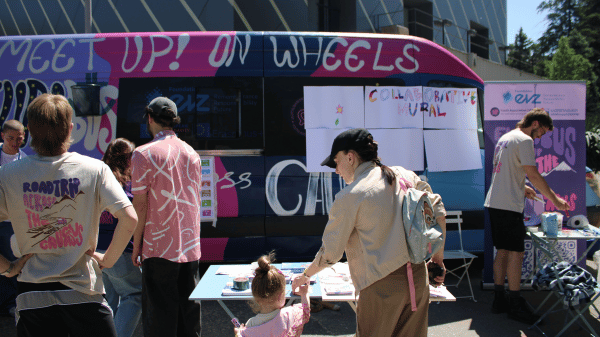
The EUROBUS project visited 18 locations in Georgia, Armenia and Azerbaijan within a period of one year. The EVZ Foundation supported the project through its Meet UP! program and in September was able to see its impact on the ground. The EUROBUS minibus carried with it interactive workshops on the UN Sustainable Development Goals, information on European exchange opportunities for young people, and microgrants to support the implementation of youth project ideas locally. In total, 12 different microprojects were created across the three countries – ranging from digital campaigns to youth camps.
For the project team, it was especially important to reach young people in rural and economically underdeveloped areas: “Each stop was different – new landscapes, new faces, new stories – but the energy was always the same. We saw how young people opened up when they realized that Europe and big ideas could arrive right on their doorstep, if only for a day.”
At the final event in Tbilisi, the creators of the microprojects from Georgia, Armenia and Azerbaijan came together with the project team and other guests, and the young participants were duly spotlighted and honored for their engagement. The Road Trip across the Caucasus – the project’s subtitle – certainly left its mark on the landscape.
Microprojects are central to the EVZ Foundation’s new pilot program Young Civil Societies for Democracy, too. Here the call for applications runs until October 15, 2025.
|
|
|
Find out more about the new pilot program
|
| |
|
| |
|
|
|
|
|
| |
|
Natalie Baruch, Fellow of the Israel Network
|
| |
This spring, you received a short-term scholarshipfrom the EVZ Foundation to collaborate with the Maimonides Educational Institute in Ingelheim. Together, you developed workshops exploring the perspectives of Mizrahi Jewish women in Israel and Muslim women in Germany. What was your impression of the understanding and cooperation between the Jewish and Muslim communities?
The workshops we developed together with the Maimonides Educational Institute showed me how much potential there is in meetings between Jewish and Muslim women, when they take place with honesty, creativity, and solidarity. We discovered that despite different histories and identities, our experiences as women have many common points – in facing discrimination, in maintaining a delicate balance between tradition and modernity, and in the struggle for recognition. The dialogue was not always easy, but it was real. My impression is that cooperation is not only possible but also essential – and it requires patience, trust, and the willingness to listen deeply to one another.
|
|
Read the full interview

|
| |
|
| |
|
|
|
|
|
| |
How can we work together to defend democratic values effectively – and counter disinformation?
|
| |
The Jewish association Czulent in Poland shows how structural change is possible.
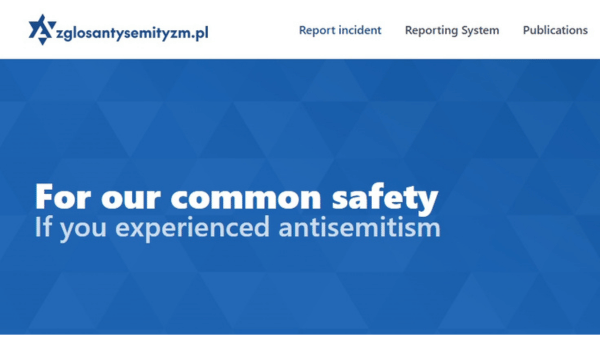
Funded by the EVZ Foundation, the project aims to develop a strategy for bringing antisemitic hate speech in digital spaces more effectively before Polish courts. To this end, Czulent works closely with civil society initiatives, communities affected by hate speech, policymakers and a broad range of experts from public authorities, with the aim of raising awareness of the phenomenon and developing practical solutions. At the same time, the Jewish community is encouraged to report hate crimes through an online platform and provided with access to legal support. And success has been forthcoming: thanks to Czulent’s antisemitism monitoring, charges were filed against several leaders of a far-right pro-Russian movement accused of spreading mass disinformation and inciting violence against minorities through hate speech.
But Czulent’s engagement faces major challenges. As director Piotr Kwapisiewicz explained: “Our project work on legal test cases involving antisemitic discrimination took place in a politically challenging environment impacted by four national elections in Poland and the ongoing war in Ukraine.” Staff at Czulent are also having to take precautions for their own safety. The organization is threatened with so-called SLAPPs – strategic lawsuits intended to intimidate unwelcome voices and push them out of public discourse. Czulent’s response: building networks with allies committed to democratic values and continuously monitoring criminal acts.
|
|
Read the latest report on antisemitic incidents 
|
| |
|
|
TAZ
|
| |
Unsafe in their country of origin |
| |
|
In connection with the Education Agenda project Queer Narratives in Media, taz joined forces with the organization n-ost to report on Fagatta and Adora, non-binary drag performers who fled from Georgia to Germany after attacks on Pride in 2023. Since Georgia is now classified as a “safe country of origin”, Fagatta and Adora face deportation despite documented violence and lack of state protection. Human rights organizations warn that queer people there remain at severe risk and are calling for stronger protection for those affected in Germany.
|
| |
Read the article

|
| |
| |
|
|
spiegel+
|
| |
|
Weleda’s Nazi connections
|
| |
|
A new study by historian Anne Sudrow examines the links between the anthroposophical movement, natural cosmetics company Weleda and the SS plantation at Dachau concentration camp. Prisoners there were forced to perform slave labor there under murderous conditions to promote “biodynamic” agriculture according to the teachings of philosopher Rudolf Steiner, who was also the founder of the Waldorf education system. Sudrow shows that anthroposophists were more closely integrated in the structures of the Nazi regime than previously acknowledged – and that Weleda also profited from seed deliveries and even product testing. These new findings cast a different light on the company’s responsibility and the still incomplete process of critically appraising its past.
|
| |
|
Read the article
|
| |
| |
|
|
Süddeutsche Zeitung
|
| |
|
Butter and Extermination: how National Socialism brought farmers in the Allgäu into line
|
| |
The exhibition Butter, Livestock, Extermination was created as part of the Education Agenda project of the same name and shows how National Socialism permeated everyday life and agriculture in the Allgäu region. Farmers were required to report production figures, and forced laborers had to work on the farms. The ideology of “blood and soil” shaped life in the farmhouses and barns, affecting aspects such as food, work and social structures. Private archival material, letters from the front and photographs vividly convey the social history of the region, revealing the impact of the Nazi regime on people’s lives.
The exhibition is on view at Allgäuhalle in Kempten until November 9.
|
| |
|
Read the article
|
| |
| |
|
|
oCTOBER 4 AND 5, MÜLHEIM AN DER RUHR
|
| |
|
Conference: And how do I respond? – talking about antisemitism
|
| |
|
The aim of the conference and the project of the same name being run by the Kurdish Community in Germany (KGD) is to engage in dialogue with local chapters and KGD members of KGD to define a shared stance on antisemitism and hatred of Israel and to discuss appropriate responses to antisemitic incidents. In the long term, the project seeks to build sustainable structures for counseling and intervention and promote critical engagement with antisemitism.
|
| |
|
Sign up now
|
| |
| |
|
|
OCTOBER 14, KARLSRUHE, BADEN STATE LIBRARY
|
| |
|
Gedenkanstoß in Karlsruhe: bureaucrats of crime – Nazi files and their legacy today
|
| |
|
In a number of short, varied discussion rounds, experts from academia, education and remembrance culture will engage in debate with committed individuals from Karlsruhe and the surrounding region. Among those taking part are Katrin Kowark of the EVZ Foundation, and also Leonard Stöcklein and Tobias Markowitsch representing Education Agenda projects. The key questions: what is the significance of remembrance 80 years after the end of the Second World War? What role did bureaucracy play in the Holocaust? And what can we learn from these files about democracy and society today?
|
| |
|
Sign up now
|
| |
| |
|
|
OCTOBER 16 AND 17, KULTURBAHNHOF VEGESACK, BREMEN
|
| |
|
Networking meeting for multipliers as part of the project remembrance lab: Kids
|
| |
|
How do children engage with Nazi injustice? How can adults support them? To launch the project remembrance lab: Kids, the Submarine Bunker Valentin memorial invites multipliers, educators and teachers to a two-day networking meeting. The event will create space for dialogue, introduce a variety of offerings for children, and include discussions on content and methods.
|
| |
|
Sign up now
|
| |
| |
|
|
OCTOBER 23, DIGITAL
|
| |
|
Thursday Topic: artificial Intelligence between remembrance culture, historical learning and digital data literacy
|
| |
AI-generated narratives are increasingly shaping remembrance culture – and they emerge not only through technical computing processes but also through interaction between humans and machines. This can create new spaces for learners to participate in remembrance culture. In this way, digital data literacy can become crucial to historical learning in a digital world, particularly in the context of the Holocaust and National Socialism, though not only on this theme.
These links will be explored by Anja Neubert, a research associate in history education at Leipzig University.
How it works: Register via EVZ Academy, enter the code #Thursday, select the date of your choice, and catch up on missed sessions. A Zoom link and reminder will follow automatically.
|
| |
|
Sign up now
|
| |
| |
|
|
OCTOBER 30, BERLIN AND DIGITAL
|
| |
|
Live podcast Ruins & Dreams: resilience and resistance – what we can learn from Ukrainian civil society
|
| |
|
How can Europeans learn from what is going on in Ukraine and the diaspora? How can we raise awareness that in all its hybrid forms, the war has already taken on a European dimension? And what is needed to jointly build greater resilience in Europe? These are the questions addressed in the fifth episode of Ruins & Dreams as part of the EVZ Conversations series, recorded as a live podcast at Publix Berlin. Moderated by Ira Peter, the discussion will feature Alona Karavai, Franziska Davies and Nataliya Pryhornytska.
|
| |
|
Sign up now
|
| |
| |
|
| NEWSLETTER Issue 11/2025 |
|
| Our next issue comes out at the beginning of November! |
|
|
| |
| Once again, the upcoming issue will present the themes and content of the Education Agenda NS-Injustice – including dates and updates from the projects as well as upcoming calls for funding proposals. We will also be taking another look at the newly published Education Agenda magazine! |
|
| All issues at a glance
|
| |
|
|
|
|
|
|
Stiftung Erinnerung,
Verantwortung und Zukunft
Friedrichstraße 200
10117 Berlin, Germany
T +49 (30) 25 92 97-0
F +49 (30) 25 92 97-11
Website
|
| |
|
Responsible:
Dr. Andrea Despot and Jakob Meyer
Editorial:
Sophie Ziegler, Jana Bültge, Sarah Keller, Katrin Kowark, Antonia Kruse
Image Credits:
Laurent Hoffmann, Alina Simmelbauer, Andrii Knyga, zglosantysemityzm.pl, Sebastian Gabsch, Natalie Baruch, Youth Association DRONI, Anna Schroll, Image Anniversary: v.l.n.r. lizenzfrei via Nordsonne Identity; Foto o. Ang./ Bundesarchiv, Bild 152-26-20; [Plakat], lizenzfrei via Pixabay; Stiftung „Verständigung und Aussöhnung", Moskau
|
| |
|
|
|
|
|
Follow us
|
| |
|
|
|
|
|
|
|
The editorial team welcomes your opinion on the newsletter and will be happy to answer any questions. We also help with any issues you might encounter: newsletter@stiftung-evz.de
You are receiving this e-mail because you have subscribed to the newsletter of the EVZ Foundation. You can unsubscribe from this information service at any time. To unsubscribe, click here
|
|
|
If you are unable to click the link, please forward this newsletter to newsletter@stiftung-evz.de with the subject line "Unsubscribe".
|
|
|
|
|
|